As we traveled north of Crescent City and across the border into southern Oregon, I began to notice some odd sounds from the front brakes. I knew the brakes were probably due for replacement, and I arranged for some work in Grants Pass, OR.
Finding a place for vehicle repairs is something I do very different on the road. At home, I had a regular mechanic, whom I trusted and did great work. If I needed specific work, he was able to refer me to someone he trusted. On the road, I have tended to visit and use larger chain suppliers for routine work. They are much easier to find, and I can return to any location for any warranty issues. My choice for the brakes was Les Schwab. As usual, the minor signs of wear belied the damage done, and the I needed new rotors in addition to the usual replacement parts. All told, I was just under $900 out the door for the work.
Did I overpay? Probably. But hunting down a mechanic or comparison shopping would have cost me time that I would have otherwise spent working. As I have no end to my current list of my projects, time spent working is worth preserving, even at a little cost.
Mostly, I’m grateful.
Brake problems are very serious when your rig weighs 15 thousand pounds, and we have driven our share of hills recently. Sometimes I catch a brief glimpse of the protection sent from on high to guide us and protect us in our travels, and this is definitely one of those times.
I’m sure that the increased hilliness of our travel accelerated the wear on the brakes, and I was unprepared and not careful enough to watch them. In particular, the wear on the front and rear brakes was about even, no doubt to the additional load on the truck while towing the Airstream. Regular vehicles usually need the front brakes replaced twice as often as the rear, but I suspect towing we will see more even wear.
In the future, I’ll be more careful and more watchful of my brakes.
 We are back to monthly summaries!! These are probably entirely for my benefit as I feel it provides some accounting for us month to month, but I figured we could share in the interest of anyone else that might be crazy enough to feel the information is useful.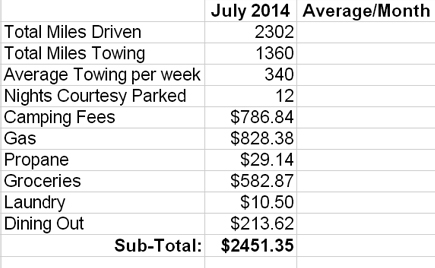
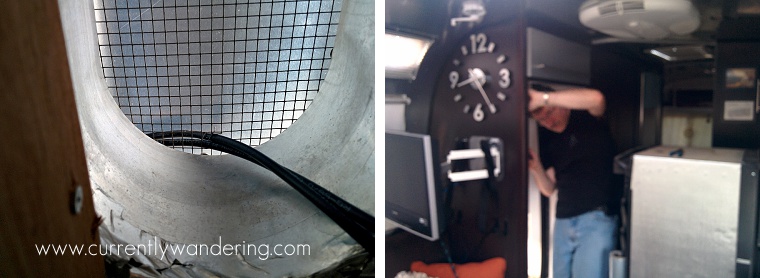
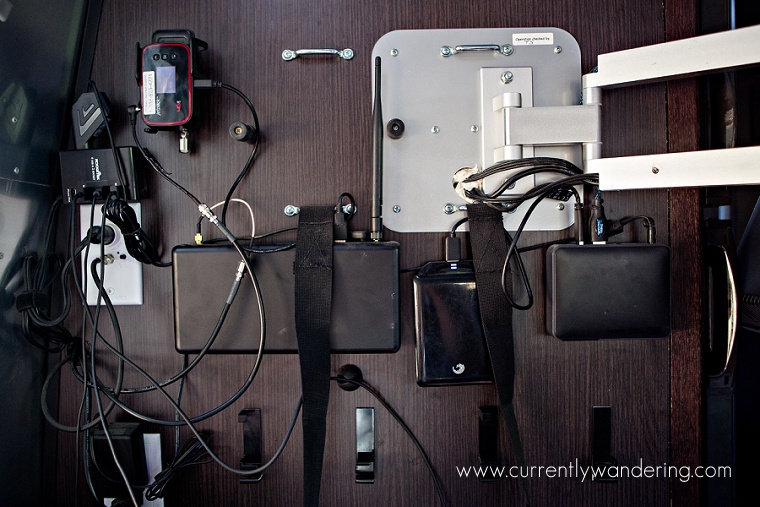
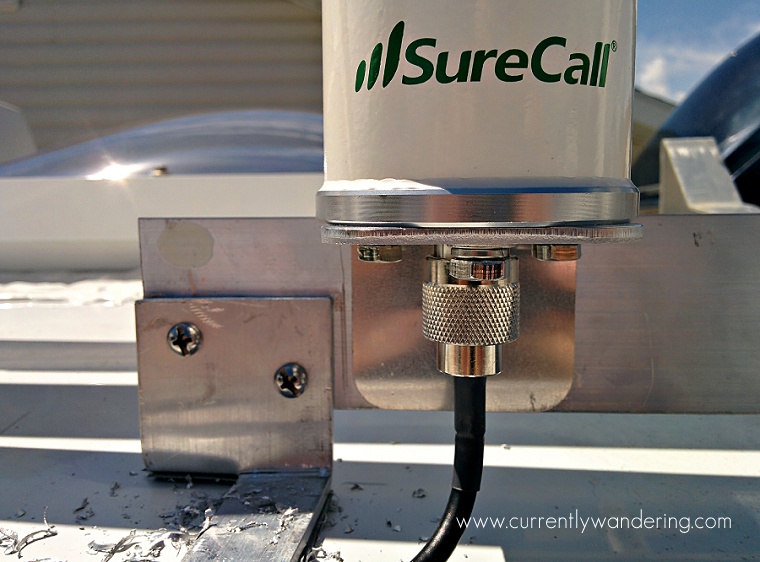 I wanted to mount the antennas on the roof, both to avoid the futz factor of an internal antenna, and to help the signal escape this faraday cage I call home. Kyle had his antennas mounted to his solar panels, but I didn’t have those yet, so I improvised. Using a piece of 1/4 by 2.5 in aluminum bar from the hardware store, I cut a horizontal piece and two ‘feet’ The feet were attached to the roof with outdoor adhesive tape, and the horizontal bar attached to the two feet and the vertical bar supporting the TV antenna. The new antennas were then screwed to this horizontal bar. Bolts with threadlocker were used on all connections. Using adhesive tape and the existing support for the TV antenna allowed a secure connection without drilling a mounting hole in the Airstream.