What we have been up to this week: Charleston, South Carolina; a love affair with trees in Skidaway State Park Georgia; making new Airstream friends; and the beach on Tybee Island. 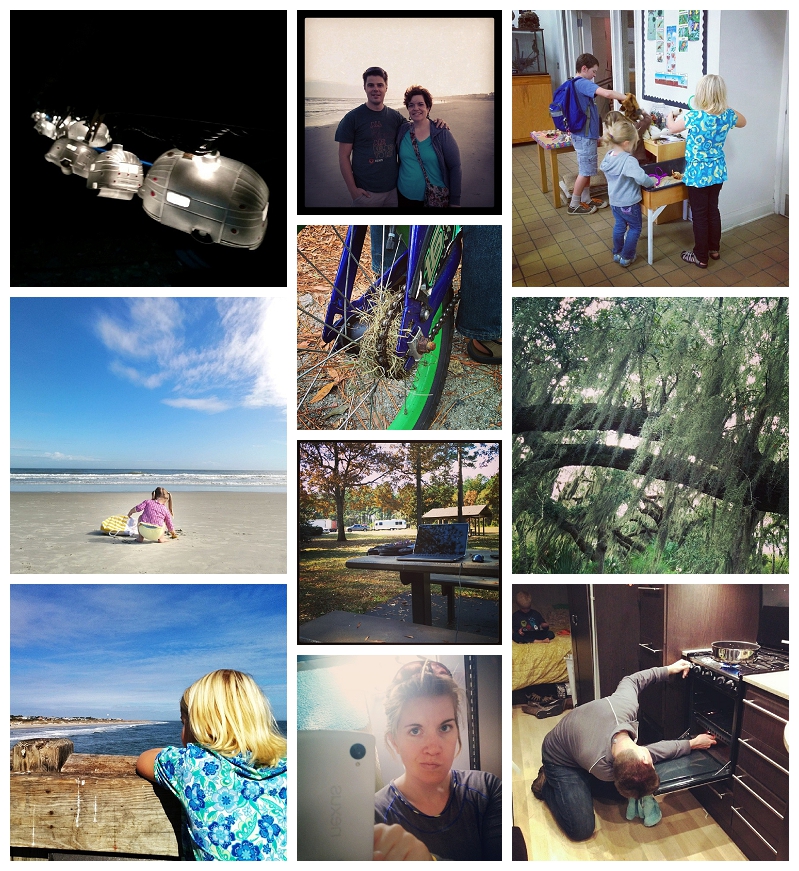
What we have been up to this week: Charleston, South Carolina; a love affair with trees in Skidaway State Park Georgia; making new Airstream friends; and the beach on Tybee Island.

I’ve been asked what we are doing for homeschool for our kids. Let me tell you about my experience putting together a curriculum for my 2nd grader, kindergartener, and pre-schooler.
It was awful.
I was so incredibly stressed out it was ridiculous. I felt that everyone I talked to had a different answer, a different way of doing things, was super vague (oh, just do what you feel is right for your family), and only seemed to add to my overall sense of hopelessness. Okay, it wasn’t that bad. I did receive some great ideas from friends on Facebook, but I felt that most ideas and programs didn’t fit the needs of a full-time traveling family.
There’s so much information out there that I had to narrow it down. I found a few blogs I liked, my favorite being Confessions of a Homeschooler. I felt like her blog was simple, easy to understand, and we thought similarly enough that I could translate what she was doing to my own situation. I purchased a few of her curriculum units – Pre-K Letter of the Week (for Cara), the K4 (for Andrew), Road Trip USA, and the Classic Literature Unit. In hindsight, I probably went WAY overboard but I was feeling a bit self-conscious and nervous at this point. Plus, I really just wanted to be prepared.
Then I spent the next few weeks trying to put together a spreadsheet for our schedule, printing out cute little labels to emulate the workbox system (but with folders because we weren’t going to have room for large carts). I went through an entire ink cartridge printing papers, putting together folders, and trying to figure out what on Earth we were going to start with. I about drove myself crazy. And don’t get me started on the cost for laminating said supplies at FedEx.
And with all of that, I felt like we didn’t really even have the CORE subjects. The really important ones. So I went with workbooks. And I love them. We’ve almost ditched everything else and just stuck solidly with those. I think my brain handles it better as there’s less prep for me to do (because I don’t get a lot of time to myself anyway and I don’t want to spend it figuring out what we are doing for school tomorrow). I just look ahead, assign them the next 5 or 6 days worth of assignments on a sticky note taped to the inside of that particular book and they run with it. When they run out of listed pages to do (I usually assign 2-4 pages every day in each book) they ask for more. Actually, they tell me they don’t have an assignment and can they PLEASE skip that book today? Occasionally I’ll let them.
I also try and mix in other assignments with their books. For reading or phonics, Andrew gets to play with his Tag Reader Flash Cards, or he’ll play Context Clues with Rachel. They also have apps on the tablets that they use for Spelling and Language Arts (that’s a whole other blog post). This way they are not doing the same thing every, single day, because that would be boring. I want to excite them. Also I feel like sometimes the workbooks don’t go as deep into a subject as I’d like so I’ll hunt around and try and find them extra practice. All while trying to be mostly offline because our internet expenses are already through the roof.
I feel like this really works for us. We don’t do school 5 days a week, every week. Some weeks it is more, some weeks less. We try and take every opportunity to explore our surroundings as we travel, and I refuse to limit a hands-on learning opportunity for the sake of a paper schedule. Two nights ago we did school after dinner. Their folders are small enough they can take them in the truck and work as we drive. We make it work, and the kids are progressing through their materials faster than necessary anyway.
So that said, here are the books that we use for our kids. Why these particular books, you ask? They had them at the local store and I could browse them before buying them. We definitely tailor these books to our kids though. We skip around, we exclude, and we definitely don’t make them repeat a concept if they get it. We don’t believe in busy work.
Rachel (2nd grade)
Spectrum Math, Grade 2 She’s actually almost done with this one – we’ll probably move up to Grade 3 by January. I think Sam has her do maybe 1/2 the problems. If she aces a pre-test, he’ll skip the whole section.
Spectrum Reading, Grade 2
Spectrum Writing, Grade 2, and Scholastic Story Starters (online)
Spectrum Spelling, Grade 3 Level 2 just seemed to easy and she BEGGED for level 3. Why not?
Spectrum Language Arts, Grade 2 This one I feel is the most lacking. 2 pages on adjectives and that’s it??
Andrew (Kindergarten/1st Grade)
Andrew is a bit of an enigma to me. His birthday is Aug 24th, so technically he should have started Kindergarten last year but we held him back so he’d be the oldest (Utah school deadline is Sept 1st). The kid blew right through Kindergarten appropriate curriculum in like a week. The K4 unit I bought? Completely too easy for him. I’m hoping to use it for Cara… He reads like a 2nd grader but has trouble in other subjects. I think if he were in public school he’d be so bored he’d want to poke his eyes out every day. He still likes to color, match shapes, do mazes, and cut things out but I see less and less of that as we go on.
Spectrum Math, Grade 1
Spectrum Reading, Grade 1
Writing – we do handwriting practice in a random book my mom gave us – he had terrible handwriting when we started. Much better now.
Spectrum Spelling, Grade 1 We started halfway through this one.
Spectrum Phonics, Grade 1
Kumon My Book of Money: Dollars and Cents We skipped the first book and went straight to this. Still very repetitive so we do about half the assignments. He actually finished the whole book today.
Kumon My Book of Telling Time: Learning About Minutes I didn’t love this one. It is SO predictable that once he got the pattern down, he didn’t even have to try. Plus they put all the numbers in there between the bigger numbers (2-4, 6-9, etc.). We did about 10 pages and then I just printed out Time Clocks for him to do. Now that we don’t have a printer, he uses an app on the tablet.
Cara (preschool)
She’s only 3. I did 2 years of preschool with the other kids, but I really just don’t think she needs it. However, she feels very left out if she doesn’t get to do school. The Confessions of a Homeschooler Unit that I bought involved WAY too much printing. Way too much color printing at that. I just didn’t want to deal with it. So, we found a less than $10 preschool activity book for her at Walmart. It includes colors, shapes, letters, that sort of thing. We’ve worked our way through letters A-C solid and everywhere we go she points out all the A’s. Cara suddenly shouting “MOM! LOOK! THERE’S AN A!” is a common occurrence in our daily adventuring. During school time, She’ll play toys, play outside, or watch the other kids.
The one thing she absolutely LOVES is her Polka-Dots. The girls is obsessed. I finally broke down and bought her a book to go along with it because a) she loves them, b) they keep her entertained for longer, and c) we don’t have a printer to just print some from online.
Oh – I’m almost forgot. Her other favorite thing to do is watch the Leap Frog DVD’s. We’ve ripped them into the computer so she can watch on one of the tablets.
Well, there it is for now. As with all homeschooling families, I’m sure our curriculum will change over time and we’ll adjust as we go. What do YOU do for homeschool? Any other ideas or suggestions? I’m all ears.
When we visited: Oct 2013
Ages of Children When We visited: 8,6,3
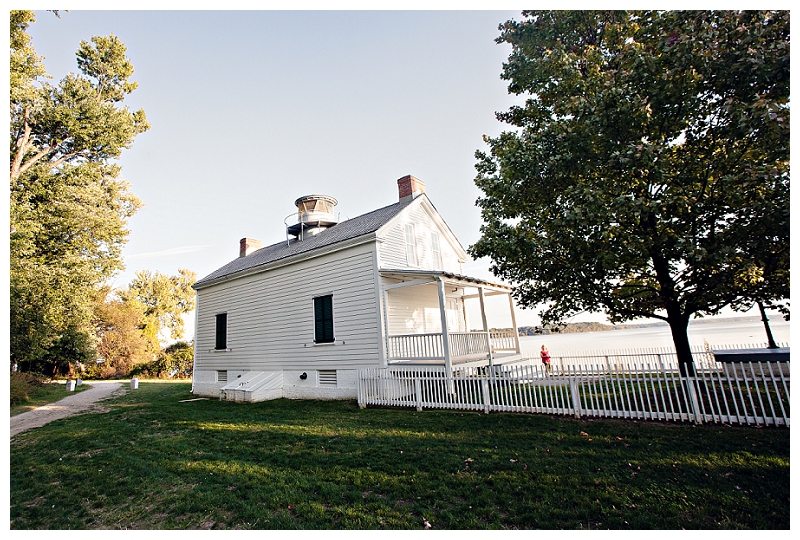
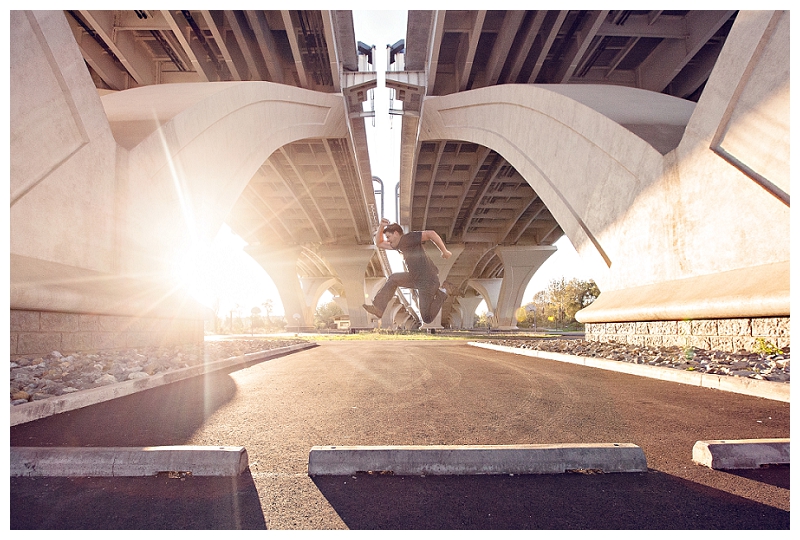
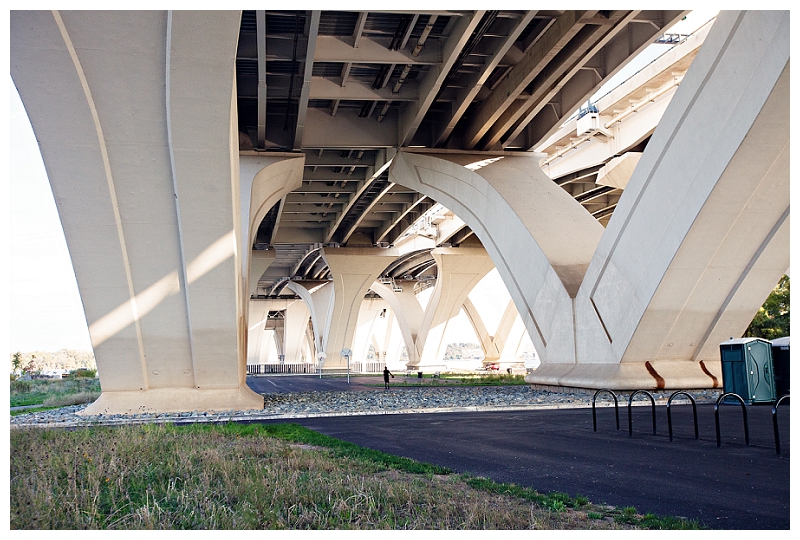
In all of the greater Washington DC area, Jones Point National Park is my favorite place. The architectural beauty of the bridge combined with the incredible use of traditionally unclaimed space sings to my soul. We discovered this off the beaten path little National Park during our Mt. Vernon Bike Date. Sitting just outside Old Town Alexandria, the Mt. Vernon Bike Trail runs right through it. I still recall riding along, turning a corner and practically stopping dead in my tracks because of the view. It lies underneath the Woodrow Wilson Memorial Bridge, a bridge we had crossed a few times as it is a common path for reaching National Harbor (among other places), and I’m sure most people don’t notice the little patch of green as they hurry about their busy lives.
This area along the Potomac River was a critical piece of history as one of Alexandria’s main shipbuilding, manufacturing, and transportation locations. There is a gravel interpretive trail that explains the different areas, the ships that were built, and why the industry was so critical to the nation. Located along the river is also the Jones Point Lighthouse, the last remaining riverine lighthouse in Virginia. You can’t go inside, but around the grounds are explanations of the original boundaries of Washington DC, and even one of the original cornerstone markers. When Washington DC was created, surveyors mapped out an area that was 10 miles square placing cornerstones first and then adding additional ones every mile along the border. Many can still be seen today, although most are in people’s yards or other awkward to get to places. This particular cornerstone (also the first one placed) is underground but you can view it through an observation window.
My favorite part about this little park, however, is how peaceful it is. Tucked underneath a bridge, but without the sounds of traffic, the Potomac river laps at the fishing pier and children laugh as they play on one of the 2 play structures. And if you go in the evening, the light streaming through the trees is divine. I highly recommend taking a picnic and spending an evening here with your family.

I get this question a lot. Second only to which camera should I buy? So I thought I’d share my favorite lens for those of you looking to upgrade beyond the kit lens your camera camera came with.
As far as consumer cameras go, they’ve gotten really good. Being familiar with the Canon line, I typically recommend anything from the Rebel line (like the Canon EOS Rebel T3i). They have plenty of megapixels, do really well in low light, plus a myriad of other features.
But, there’s only so much you can do with a camera. The BEST way to get better photos is to upgrade your glass, ie your lens. Better lenses have a fixed aperture setting, meaning that no matter where you zoom on the lens your aperture remains the same.
PLUS (and this is my favorite part) an f/1.8 or f/2.8 lens is more creative. The lower number means less in focus so you can focus on a small part of your photo and blur everything else. There’s also a bunch of technical reasons I can get into about how your lens is really the sharpest a couple of f-stops above its lowest, so shooting an f/1.8 lens at 3.5 is better than shooting a 3.5 lens at 3.5, etc. but we won’t get into that. Let’s go with it really is just fun to play with. Be careful though especially when photographing people – sometimes you can get one eye in focus and the other out if they are not on the same plane. 🙂
On to the lens: This is the Canon 50mm f/1.8. Its lightweight, costs about $100 and is nicknamed the “nifty fifty”. If you are looking for something slightly better, the Canon 50mm f/1.4 is the one I have in my bag. Its better built, focuses faster, and has better glass (sharper images). It usually runs about $300 so it all depends on how deep your pockets are.
Here’s a photo taken with the 50mm f/1.4 last May at Cara’s Buzz Lightyear birthday party:
5d Mark II
ISO 400
f/3.5
1/250


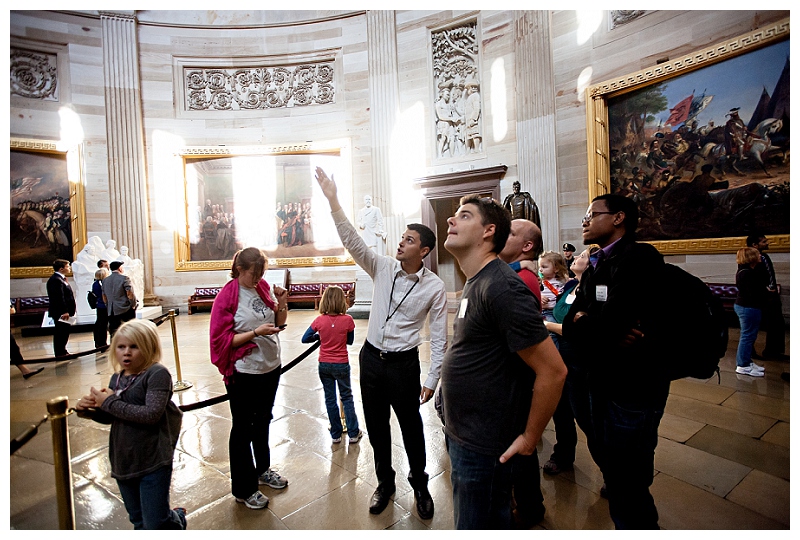
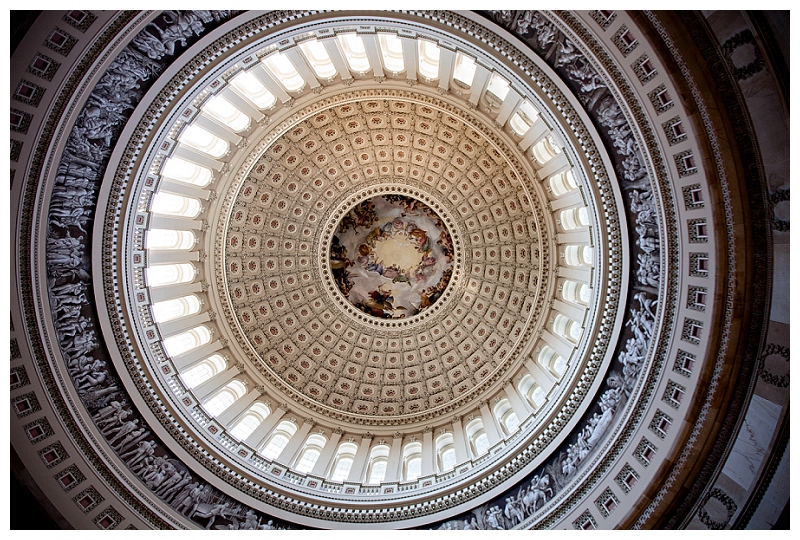
A trip to the US Capitol while visiting Washington DC is definitely a must do. The building is both architecturally & historically significant and with just a little advance planning you can make the experience a good one for both you and your kids. We put together 5 tips for visiting the Capitol with young children.
When we visited: Oct 2013
Ages of Children: 8,6,3
This is by far my number one suggestion. Of course, it also means that you have to plan ahead as most offices suggest that you submit your request at least a few weeks in advance. Mike Lee, who is one of Utah’s Senators, has an easy to navigate website with “Visit DC” right on the homepage. You fill out the online form with your available dates and which tours you’d like and one of the interns will get back with you via email or phone to set you up. In addition to the Capitol, you can also request tours for the Bureau of Engraving and Printing, the Library of Congress, the Supreme Court and the National Archives. Just note that you’ll meet your guide at the Senate Office Building, NOT at the Capitol itself.
The advantage of doing this is that your tour group is simply… you. Your guide can tailor the experience to suit your family’s needs. Ours skipped the video presentation (not enough time and we’d have to wait 20 minutes in the Visitor Center), and condensed a lot of the material so the adults still received interesting information and the kid’s attention spans weren’t maxed out.
Always a tricky question. We got lucky (although we got lucky a lot parking in downtown DC) and found spots for both us AND our friends on Constitution Avenue near 3rd St. We paid with the Park Mobile app and walked approximately .5 mile to our Senator’s office. All of the parking closer to the Senate Office Buildings and the Capitol building are permit only so plan on a bit of a walk no matter what and bring a stroller if your kids tire easily.
Alternatively, the Senate Office Buildings are only a .5 mile walk from the Capitol South metro station.
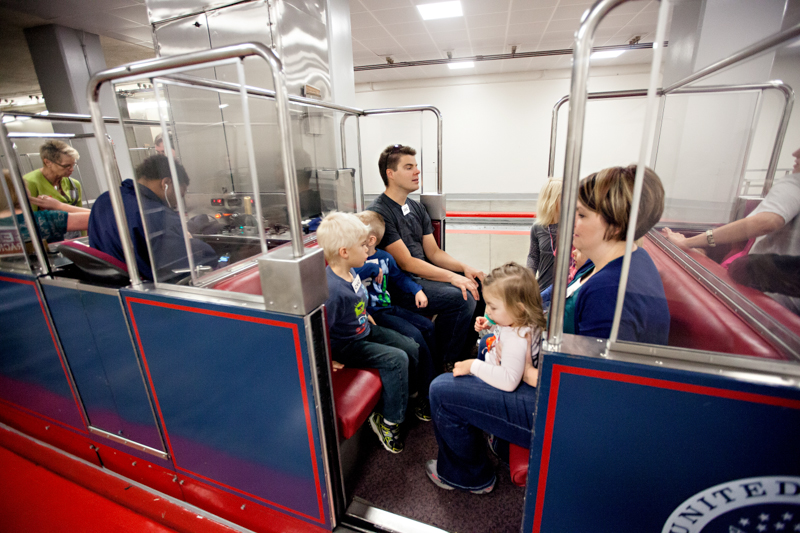
Another perk of scheduling with your Senator is that you walk over to the Capitol via the underground tunnels and there is a TRAIN. What kid doesn’t love a train ride? Granted it is super short, but all the kids loved it. Our guide informed us that when Congress is in session (and debating an important piece of legislation), many of the Senators go back and forth between their office and the Capitol all day. While a train ride may seem a bit on the lazy side, walking that .5 mile over 20 times a day would definitely take its toll.
You can’t even take it in with you and just not eat it. If you have any food or water in your bags you’ll have to throw it out. Luckily, our Senator’s office informed us of this BEFORE we got to security. We stuffed all of our food and water into one backpack and left it with the interns at the office.
This is where parking close came in handy – once the tour was completed, dad ran to the truck and grabbed our cooler with lunch and we picnicked on the Capitol lawn.
Each state was allowed to contribute 2 statues and all have done so (make your kids do the math to find the total number). Many are scattered throughout the Capitol and a fair number are located in Statuary Hall. Unfortunately, my kids weren’t as interested in a statue scavenger hunt as I hoped they’d be but they are still fun to find.
Utah has a statue of Filo T. Farnsworth (American inventor & pioneer) located in the Visitor’s Center, and also Brigham Young (Mormon prophet & pioneer who led the Saints to Utah) located in Statuary Hall.
Have you visited the United States Capitol? What was your favorite part?