During our first 6 month round of travel, I managed to keep connected with just a loose Verizon Hotspot, with service through Millinicom. When I say ‘loose’ I literally mean the hotspot was usually sitting on the table. I also had a Wilson SleekV 4G cradle booster, and a tiny magnetic antenna that I could mount in the window. I only pulled out and used the booster when I had a low signal.
After meeting Kyle and seeing his sweet setup, I decided it was time for an upgrade. Now that it is all installed, it’s time for a report.
Gear List
- Pantech hotspot
- Wilson Sleek-V booster cradle
- PepWave SoHo (with DC power adapter)
- 2 Roof mounted antennas
- DC power distribution
Outside Antennas
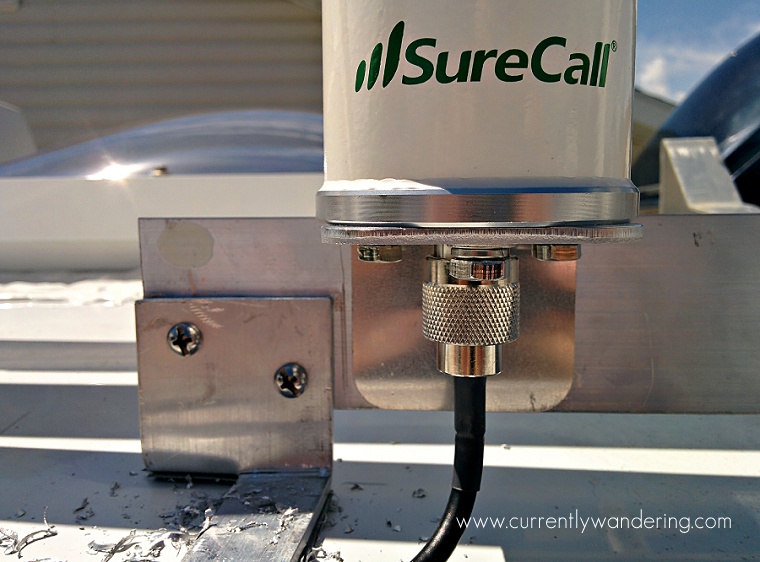 I wanted to mount the antennas on the roof, both to avoid the futz factor of an internal antenna, and to help the signal escape this faraday cage I call home. Kyle had his antennas mounted to his solar panels, but I didn’t have those yet, so I improvised. Using a piece of 1/4 by 2.5 in aluminum bar from the hardware store, I cut a horizontal piece and two ‘feet’ The feet were attached to the roof with outdoor adhesive tape, and the horizontal bar attached to the two feet and the vertical bar supporting the TV antenna. The new antennas were then screwed to this horizontal bar. Bolts with threadlocker were used on all connections. Using adhesive tape and the existing support for the TV antenna allowed a secure connection without drilling a mounting hole in the Airstream.
Cable Run
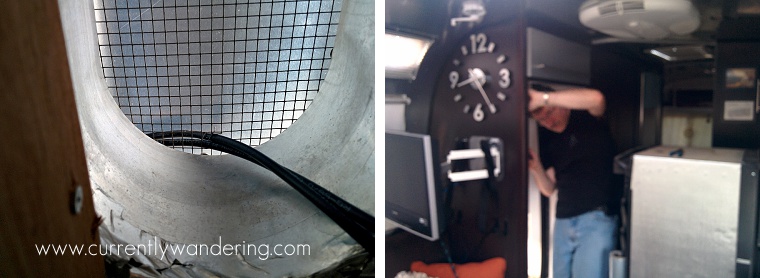
Running the antenna cables took some thought. I ended up running them along the roof and down the vent above the fridge. To access the small area behind the fridge, I (with the help of my Father-in-law) removed the fridge. Removing the fridge mostly involves a hunt for the screws and bolts holding it in place. After those were removed, it slid right out. We set it on some cardboard on the Airstream floor while we worked inside it’s enclosure.
We were able to remove a thin wooden panel, cut a small hole in the mesh covering the fridge vent, and run the cable down the wall and out the existing hole behind the TV. The antenna cables are 10 feet long, giving me just enough room to make it work.
Then, of course, we put the fridge back into place and reconnected it to the AC, DC, and propane. And it still worked! We ended up using some foil tape on hand to seal the back panel to the side walls, so you might want that handy if you attempt this stunt yourself.
Gimme The Power!
We now had some additional power requirements behind the TV. I found a DC splitter that also had USB ports in place, and this worked well. We have a 12V connector for the PepWave, and USB power connections for the booster cradle, and our two cellphones which sit in brackets to charge while we sleep.
The Pantech hotspot connects to the PepWave via USB, which provides both power and a network connection.
Industrial Strength Velcro
With everything hooked up and working, it was time to secure it to the wall. I used industrial strength velcro for this job, and it has worked very well. The velcro allows for things to be moved or adjusted, and has held securely while towing.
Amazingly, all this gear fits in the space behind the TV, making it nearly invisible unless you look for it.
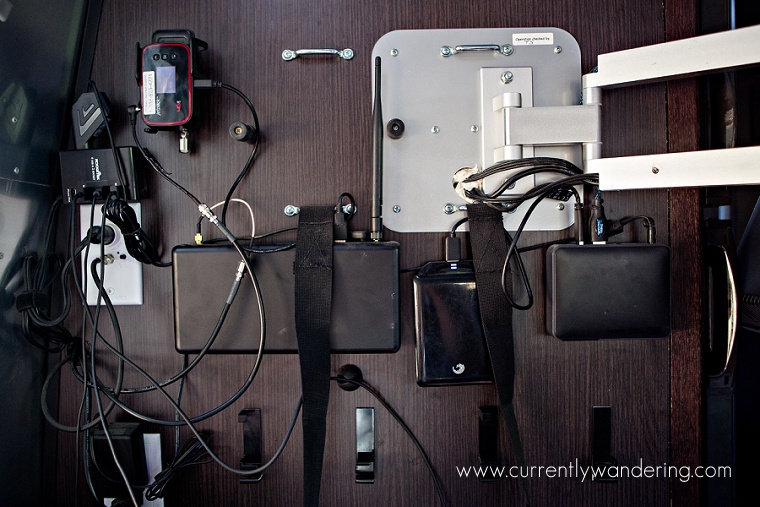
And that, folks, is the wall of awesome.