Categories
Homeschool Musings of Sam Video

I Introduce My Kids to Programming Using Robot Turtles

I introduce my kids to programming using Robot Turtles

Months ago, I backed a KickStarter project called Robot Turtles, a board game designed to teach kids fundamental concepts of programming. I had been thinking about using programming as part of our home school curriculum, and this was a great place to start. We received Robot Turtles just before Christmas, and it was one of the gifts opened during our Airstream Christmas.

At the request of the kids, we pulled out the game and figured out how to play. I recorded one of our games to share.

The game is played with an adult acting as the Turtle Mover and the other players acting as Turtle Masters. Turtle Masters cannot directly move their turtles, and must use the instruction cards to instruct the Turtle Mover as they move pieces on the board game. The game action cards include Right, Left, and Forward, as well as Laser, Bug and the Function Frog. The Function frog teaches code reuse. The Bug is for when they incorrectly instruct their Turtle and want the Turtle Mover to reset their game piece. The game does not include loops or conditionals, but otherwise does a great job teaching the basics to kids.

When I say kids, I mean all of them. Rachel and Andrew play very well, but even little 3 year old Cara understands the concepts and plays well. She is more easily distracted, and frequently directs her turtle  out of the way to ‘laser blast’ an ice wall. Despite her shenanigans, it is very clear that she understands the basic ideas.

Jess took the kids to the Perot Museum of Nature and Science in Dallas this week, and the kids rocked the ‘program a robot’ exhibit. I didn’t get to see it happen, but Jess was ridiculously excited about how well our kids were able to program the robot to navigate the maze.

Today for #roadschool my kids programmed robots to navigate a maze. #soproud #currentlywandering #astc #Dallas #texas #PerotMuseum

There will be more Robot Turtles (and related teaching tools) in our future.
Categories
Finances & Money

Paid Vacations for the Self-Employed

Paid Vacations for the Self-Employed

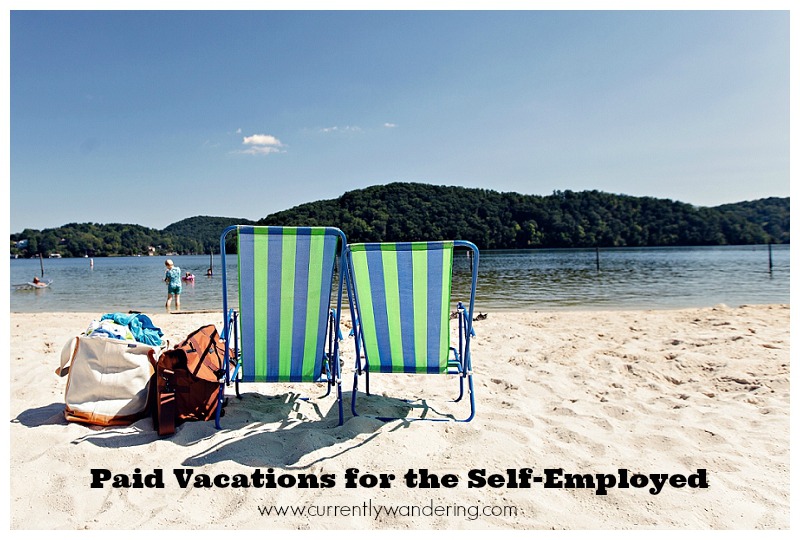
One clear difference between self-employment and a salaried job is the lack of paid vacations. I am paid hourly so when I don’t work, I don’t get paid. Without a bit of advance planning, it is easy to feel like I can’t take time off or relax without feeling the financial burden.

Having just spent a Christmas without that worry, I thought I’d share how I balance work and time off.

My secret is simple: I plan to complete the necessary work in 20 working days per month. Every month (except February) has more then 20 week days. This allows a few extra days per month for time off. I don’t have to wait for the end of the month for those extra days. I use them during the month as convenient. As long as I get 20 working days in during the month, I know I’ll make enough money. If I don’t need the vacation days, I’ll work like normal and save the billable time/money for days that I do want to take off.

Using this method, 2013 provided 21 extra week days:  enough for a full month off. I’ve used that time for sick days, birthdays, holidays, “mental health” days, and if I choose to work, “bonus” money.

This math also makes it easy to figure out how much money I need to bill each day: I calculate my pre-tax monthly required income (paycheck + income tax), and divide by 20. That is the dollar amount I need to invoice each day. Divide that amount by my hourly rate and I get how many hours I need to work on each work day.

Should I want additional time off, I work more than my hourly requirement on days where nothing too exciting is happening. There are some days I settle in and work 8-9 hours instead of my normal 5-6. This allows me to get ahead and build up some extra vacation days. I bill monthly (see my How We Travel Without Being Independently Wealthy Post) to allow me the flexibility to average my hours over a longer period of time. Billing every two weeks would shorten that time span, but can also work well.

Time easily converts to money: If I want a bonus instead of time off, we bill for the extra hours I work instead of saving that time for vacation.

Because I know my plans rely on a 20 workday month, I’m free to enjoy my days off without stress and worry.

Questions? Confused? Please ask!


Categories
Finances & Money Most Popular Posts

How We Travel Without Being Independently Wealthy

How We Travel Without Being Independently WealthyMany of the folks who hear our story assume that we are somehow financially set, that we have the money to traipse about the country living off savings or other residual income not tied to daily involvement. You might be surprised to discover that our finances are likely not very different from yours.
We are not independently wealthy. We pay a mortgage on a house in Utah where we lived for several years before setting off. We are paying off loans for both the truck and the Airstream. Our short term financial buffer would be depleted within months without me bringing in a paycheck.

How can we do this then? We’ve made time with our family a priority, and we sacrifice less important things. Jess does an amazing job feeding our family with a reasonable food budget. We rarely eat out. When we do, it’s either one of our standby ‘feed the family for less then $20’ meals or we are splurging because the local food is rumored to be amazing. We have national passes for Science Centers, National Parks, and Zoos/Aquariums. This allows Jess to take the kids on excursions without spending a lot of money. She also takes them to libraries, on bike rides, or to the park, just as she would were we leaving in a regular house. I work a reasonable portion of each day to earn money, and we trade having things for spending time together.

There are plenty of useful details about how we do this, and we’ll post more over time about the details. For now, here is a quick summary of what I do for work:

I am self-employed. No health benefits, no salary. I do long-term consulting for a few clients, and I bill my time hourly. This allows me to know exactly how much I need to work in order to pay the bills. Need extra money for Disneyland? Work extra hours. While it is a direct time for money scenario, it also gives me unlimited earning potential should I choose it.

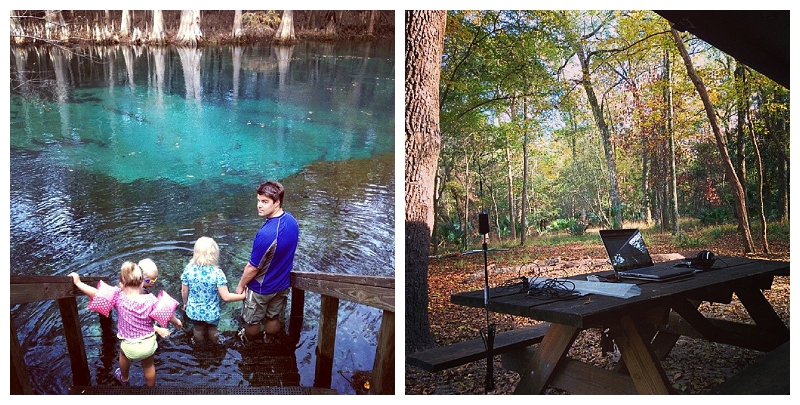
For my clients, I program and do software and system architecture design, working from a laptop with a Verizon Mifi for internet access. I spend an average of 5 or 6 hours, 6 days a week working. Between driving and adventuring, its easier to break work out over 6 days rather than 5.

I bill monthly. We get paid monthly. It means we have to budget more carefully and make the money last, but its also less hassle than every 2 weeks. We prefer it this way.

The key, for me, to staying engaged and focused on work is to work on stuff I am really passionate about. A really great set of headphones doesn’t hurt either. I have more then enough work for the time I wish to spend working, and it is very rare that I accept additional work. I have clients that understand my chosen lifestyle and work with me, allowing time and location flexibility.

We realize we are blessed with a job that works well for traveling. One of the many reasons we feel that not only CAN we do this, we SHOULD. There are many jobs or other employment that allow for long-term travel. If this lifestyle is something you are interested in, definitely look around and explore your options. Talk to other traveling families and see what they do. If you want it bad enough, you’ll work something out. Where there is a will, there is a way.

Categories
Faith

How to Find an LDS Meeting House While You Are Traveling

How to Find an LDS Meeting House While Traveling“Its seriously the smallest church building you’ve ever seen,” I say to Jess as she wrangles Cara’s dress over her head last Sunday morning.

“No way. Really? Are they even going to have a primary for the kids?” she asks.

“No idea,” I respond. “But I guess we’ll go find out.”

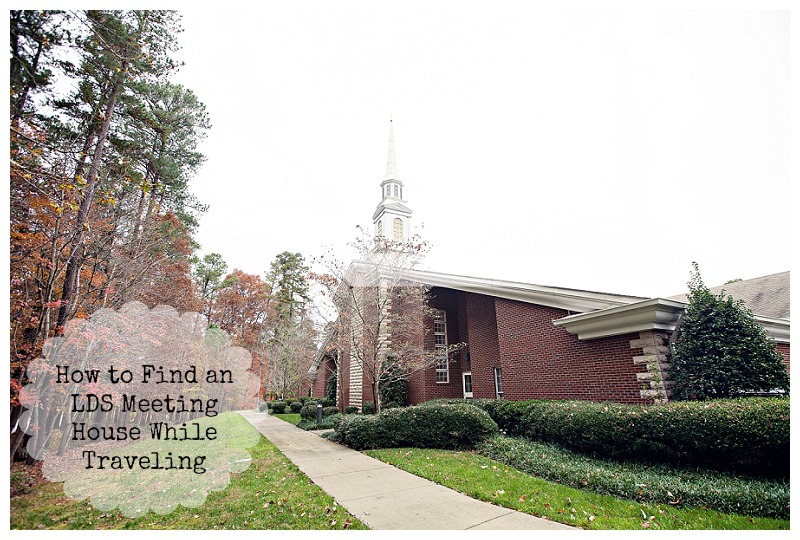
We arrive at the church building (aided by Google Navigation on my phone), and it is, indeed, the smallest LDS Meeting House Jess has ever seen. Most buildings are fairly large, with a good sized chapel for a congregation of 100 families to meet in. Rows of pews, a pulpit area with choir seats, 30 ft ceilings. Not ridiculously huge, but you know, spacious. There is usually even a gymnasium (hard wood floors for basketball and other activities), and classrooms around the perimeter of the chapel & gym.

This small building, in Apalachicola (app-a-latch-a-cola), Florida had preciously one larger meeting room (could be divided into thirds with curtains to make smaller classrooms) for the chapel, regular chairs, a movable pulpit, 1 small bathroom, and maybe 3 classrooms? Maybe? Rough count there were approximately 25 people in attendance, only 2 under the age of 20 and we’re pretty sure they were visiting grandchildren.

We loved it.

Arriving unannounced to a worship service 2000 miles from “home” and feeling completely at ease and in familiar surroundings is one of the blessings of being a member of the Church of Jesus Christ of Latter-Day Saints. The meetings are conducted the same, there’s always sacrament meeting, followed by Sunday School, then Priesthood/Relief Society. The same lessons are taught in every class all over the world. Its comforting, familiar, and helps us continue to worship and be strong in our faith in such a transitory life style.

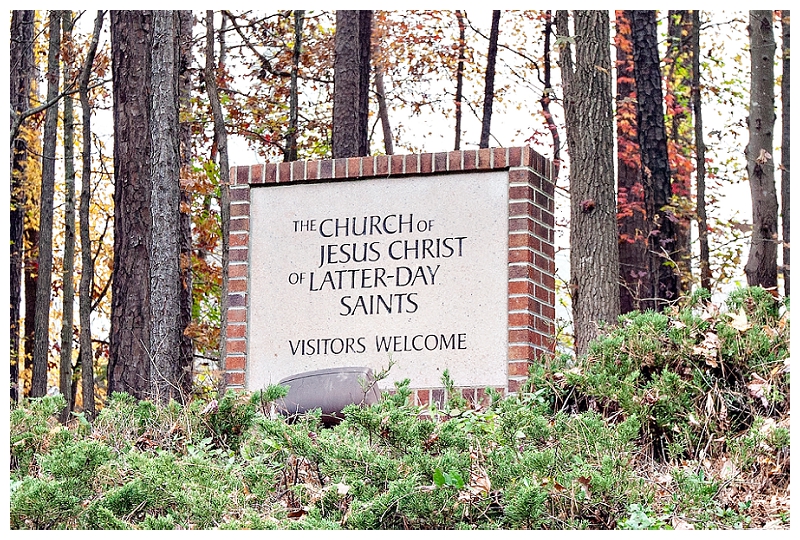
Visitors Welcome Sign LDS Meeting House

Finding a nearby ward to attend is actually very easy, using some of the tools the LDS Church has produced and here’s a run down of how to do it:

To get started, visit lds.org/maps and click on Find a Meetinghouse. Enter an address, or even just the name of the town you are in.

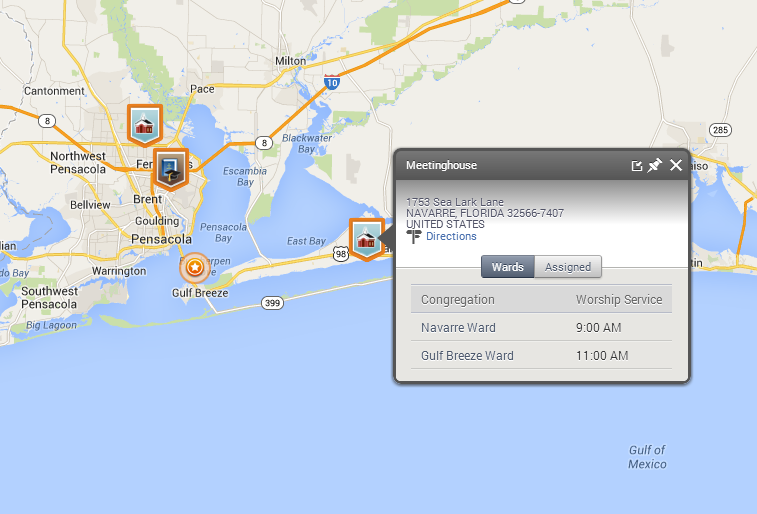
The map will show locations of LDS meeting houses and other nearby buildings such as CES buildings and Family History Centers. Click on a location, and it will tell you which wards meet in the building, and what time their meetings start.

If you click on a location and you see information not related to a ward, click the ‘Other Units Here” link at the bottom of the popup box, and it will show you local meetings.

If you know your address, you can get driving directions (which will include a time estimate). As you are visiting a ward, you can really select any meeting location and time to fit your schedule. Meetings typically start anytime between 9 and 11, with times sometimes ranging from 8am to 2pm, depending on how many wards meet at that location. Choose a meeting time that works well with your schedule, and enjoy your worship!

This week for us? We’ll be attending the Gulf Breeze Ward, starting at 11. See you there.

Find Places of Worship   LDS Maps


Categories
Florida State Parks

Jess Parks the Airstream – Manatee State Park, Florida

Manatee Springs State Park FloridaHaving slightly more trailer towing experience, I have been doing all the driving whilst towing the Airstream. Jess has been determined since we set off from Virginia to become familiar with all the ins and outs of daily operation. She knows how to safely connect power and water, and could probably dump the tanks by herself if she tried.

Her first towing experience barely counted: She started at a highway rest area and stopped at a highway rest area. Her major obstacle was a construction zone, where she deftly dodged orange cones.

Her first REAL towing experience was a few weeks later, driving North from Tampa to Manatee Springs State Park, our destination for the night. She took over when I needed to join a phone conference. She piloted us beautifully along the highway to the town just outside the state park for a small grocery stop. I was finished with my call by that time, but she wanted to take us all the way in.

Checking into the entrance station, we were assigned spot 84 and given a map to the site. We pulled up to the site, and I jumped out to spot Jess as she backed the 28 foot Airstream into our campsite.

I quickly gained a new level of respect for Jess’ skill at spotting me as I back up. I barely managed to keep an eye on all the trees, the water and power posts, fire ring, the Airstream and truck, all while staying in view of the truck’s mirrors.

She did fine, and even received an encouraging comment from a patiently waiting elderly camper. We added a few boards to level the trailer, then unhitched, hooked up utilities, and even pulled out the awnings. Success!

We were quite pleased with ourselves and the beauty of the park and campsite. About a half hour later, we realized that we had carefully parked ourselves in campsite 80, not 84 as assigned.

We checked the next morning to see if we could stay in spot 80 instead, but to our dismay told that reservations had been made for site 80, and we’d need to move. She let me re-park it.

Despite our parking mishap, we rather enjoyed our stay, including some play time on the park’s play set, swimming in the freshwater spring, and riding bikes around the campground. I managed to pull in just enough Verizon signal to get my work done. If we hadn’t been in such a hurry to get to our next location, we could have enjoyed a much longer stay.