Categories
Faith

Celebrating Christ

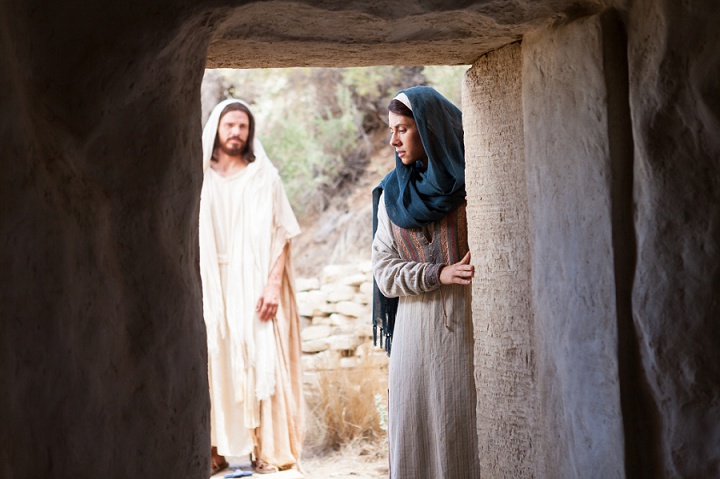
easter-pictures-mary-magdalene-tomb-1104071-tablet

Easter is a wonderful time to celebrate our Savior, Jesus Christ. The symbolism of spring, a rebirth and a fresh beginning is a perfect frame to consider the new life offered by Christ. Symbolism is important in The Church of Jesus Christ of Latter-day Saints (which is the official name of the Mormon Church) though we use symbolism in different ways.

If you have ever visited an LDS church or temple, you will notice that the symbol of the cross is absent. We do deeply believe that Christ sacrificed himself for us, but we choose to symbolize his life over his death.

He lived for us, loved us, and taught us. He died for us, redeeming us from our sins. He opened the gates of death, and we all will be resurrected. The real magic of Easter is that Christ Lives again, and is here with us. He loves us, watches over us, and helps us in more ways than we can detect.

Part of Christ’s involvement in our life today is the calling of Prophets. As in days of old, he has called prophets to teach us the Good News of the Gospel and help us apply it in our lives.

Twice a year, we have the opportunity to hear directly from a prophet called of God, his 12 apostles today, and other leaders in the church. Each April and October a conference is held, and using today’s awesome technology we can stream it right over the internet.

Saturday April 4th and Sunday April 5th, there will be sessions streamed live at 10am and 2pm Mountain Standard Time. Please join us and hear the messages and music presented. (Visit lds.org during conference time to see the live stream.) My soul is fed each time, as The Spirit touches my heart and motivates me forward on the path of faithful living.

easter-because-he-lives-600x337

We enjoy some typical traditions including yummy breakfasts and Easter egg hunts, but my favorite part of celebrating Easter is dedicating some of our time to learning and living the Gospel of Christ more fully.

Categories
Musings of Sam

Like an Old-Time Rail Journey

Big Balanced Rock, Chiricahua National Monument

Full-time travel is not a vacation.

Vacation allows us to put off important issues for that short time to focus on the time we have, the people we have, and the experience we have. Full-time travel requires that we deal with life’s issues as we travel, having no near future to defer to. Issues of house maintenance, parenting, cleaning, relationships and even taxes must be dealt with.

At times, this can seem overwhelming, and even frustrating. It can be hard to focus on mundane but important things when we are seconds away from a trail, new friends, and wonderful experiences. This last week, I had a day frustrated with such issues. A friend posted this quote:

“Anyone who imagines that bliss is normal is going to waste a lot of time running around shouting that he’s been robbed. The fact is that most putts don’t drop, most beef is tough, most children grow up to just be people, most successful marriages require a high degree of mutual toleration, most jobs are more often dull than otherwise. Life is like an old time rail journey…delays…sidetracks, smoke, dust, cinders and jolts, interspersed only occasionally by beautiful vistas and thrilling burst of speed. The trick is to thank the Lord for letting you have the ride.”

― Jenkin Lloyd Jones, Unitarian Minister

My mental burden was lifted, just by realizing this corrective perspective. Life is good, but we must not measure such goodness in any one moment to decide our happiness. And certainly not in the middle of taxes.

Categories
Daily Life

Hundreds of days, and counting!

Crater Lake NP_29I began to wonder today how long we had been traveling. Our ‘getting started’ date is a little fuzzy due to starting with a house-swap before Airstream travel and a short break selling the house. I decided to fix our ‘start’ on November 13th, 2013 when we drove south from Virginia, but not count the 55 days we spent back in Utah selling our house.

As of today, that makes 421 days on the road! Actually doing the math and figuring it made me realize the scope of this adventure we are on. We’ve seen 27 states (14 since November 13th 2013) and briefly visited both Canada and Mexico.

I’ve added a day counter to the blog, so we can more easily keep track of this statistic. Look for it in the left sidebar. Part of my inspiration to keep track of our journey comes from Tim over at WatsonsWander. He recently created an infographic site to detail their travels, and did an awesome job.

We have no idea how long our adventure will be, or of what form it will take. Our goal is to maximize the benefit to our family in experience, in learning, and in service. Our goal is not necessarily a large number, but a meaningful one. May each of these days be invested wisely!

Categories
Solar & Power

Power Upgrade: My Plan for Self-installing Solar

IMG_2362-Edit copyAfter evaluating our needs, and figuring out what I don’t know about installing solar, we sought for recommendations for a professional installer. We began conversations that started good, and gradually got worse and worse. This happened while I was camping just next door to Dave Zimmerman in the middle of the Mojave Desert. Dave happens to have nearly the exact setup I was considering, so took a peek under his couch to study the wiring a bit.

After a bit of reading and conversation, I’ve determined to try and install this all myself. It will save some cash, allow us to control our own schedule, and I can be sure it is done in a way that I’m pleased with. I’ve mailed the panels to a willing friend in Arizona, and we’ll do the install at his house. The install seems to fit in 3 distinct phases, with the ability to ‘pause’ in between each.

Phase 1: Rooftop work

In this phase, I’ll attempt to do all the roof-top work. I’m going to mount the panels using the crazy sticky 3M tape that AM Solar ships with the kits. After mounting, I’ll use some lap sealant around the mounting point to protect the adhesive from the elements. I’m installing 3 135 watt panels, one in each corner of the Airstream, skipping the corner with all the antennas.

I’m going to use a fridge vent combiner box, and run the wires down behind the fridge and into the under closet space. Each panel will need to be wired to the combiner box, and there is some wire work on each panel as well that involves crimping and some heat-shrink tubing. I’ll need to pull the fridge to run the wire down from the fridge vent, but I’ve done that twice before, and the last time I didn’t even empty it!

At the end of this phase, I’ll have panels on the roof, and wire down inside the house. Taking care to keep the end of the wire wrapped and insulated, I can pause here, leaving the coil of water under the wardrobe.

Phase 2: Wire run

Nearly all of the wiring needs to be joined together at the front of the Airstream, as close to the batteries as possible. The main wiring panel is under Cara’s bed, so I’ll need to get the wire from the panels run forward to that space. From under the wardrobe, I’ll use an existing wire chase that runs under the floor to thread the wire across the hall and up behind the wiring panel. I’ll then run the wire past the hot water heater, behind the bathroom lower cupboards, along the wall underneath one of the front kids beds, and into the wiring space.

In addition to the wire from the panels, I’ll need to add the remote wires that connect to the BlueSky control panel. I’m mounting this in the kitchen cabinet, located conveniently above the wiring panel. I’ll cut a hole in the cabinet, and run the two control wires down to the floor to join the wire bundle before it heads back past the hot water heater. There are two small wires to run: one is the control wire from the solar charge controller, and the other is the sensor wire from the battery monitoring shunt that will allow accurate measurement of battery use and charging. I’ll install the controller into that hole as well, though it won’t be connected to anything till the next phase.

While I’m doing this run, I’m going to run a length of romex AC wiring cable from behind the electrical panel to the forward space as well. While I’m not going to use this wire now, it will come in handy if I add an inverter and wire it to the house outlets.

That bundle will be secured and wrapped when exposed to protect it during it’s run. At the end of this phase, I can leave the still carefully isolated wires wrapped underneath the forward bed.

Phase 3: Wire it up!

This is the most interesting phase of it all, as it contains the most unknown issues. I’ll need to rewire the house wiring in a few specific ways to connect the solar and monitors.

First, I’ll need to re-arrange all the electric pieces placed by Airstream. This will allow some more room for the additional components I’ll be installing. I’ll mount the BlueSky charge controller in the newly available space. The solar wires will be wired first to a cutoff switch, and then to the charge controller. I’ll connect one remote cable from the control panel there as well, and add the battery temperature monitor cable as well.

I’ll be rewiring the house wiring so that the negative battery connection is run through the monitoring shunt. I’m going to attempt to do a clean, full install there, including rewiring the electric jack behind the shunt as well. This will allow for a full system monitor to capture and understand ALL of my power use and charging activity. This job might be the most time consuming, as there are lots of wires to adjust and reroute. The final bundle will need to be re-protected on it’s route from the battery box into the wiring panel. That shunt will be connected to the monitoring cable that was placed in phase 2.

The difficulty of this task is aided some by the wiring diagrams that I’ll receive with my solar kit from AM Solar. I’ve seen the diagrams already, and they are clear and easy to follow. If this part of the installation goes south, I’ll locate an automotive electrician to help me clean it up and get it working properly.

Am I crazy?

Possibly, but I’ll learn plenty during the process, and I’ll surely end up with some interesting stories to tell. I’m planning to do one phase each day, with some (paid) work in between. I’ll need to do almost everything during the day, so the kids have a place to sleep at night. If needed, I can pause for a few days between phases to normalize and take care of stuff.

Categories
Airstream Accessories Solar & Power

Power Upgrade: Drop-in Multi-stage Converter Upgrade for the Airstream

IMG_20150128_113838For some insane reason, our Airstream came from the factory with a single-stage charger. When connected to shore power (or a generator), the converter provides both 12V DC power to the Airstream, and also charges the house batteries. As a single-stage converter, it has only one mode: charge.

This single charge mode is neither fast nor smart. It takes a few days to charge the house batteries fully, and then will continue applying the charge, causing the flooded cells to boil and the electrolyte liquid to evaporate.

A bit over a year ago, I had replaced our two Group 24 flooded batteries, and in the following year, our lovely single-stage converter had boiled enough liquid out of the batteries to cause a significant decrease in capacity. I set out to resolve the issue, first with a new set of batteries, and then a converter upgrade.

Our Airstream came with a Parallax 7355 power center. The unit has both a converter in the lower section, and AC and DC distribution panels in the upper section. I found a new converter designed to be a drop-in upgrade to the converter portion of the power center. The Progressive Dynamics 55 amp (PD4655V) unit was the right drop in replacement. I found it first over at bestconverter.com, but I couldn’t get them on the phone to ask about shipping time. I ended up ordering the unit from Amazon (Prime Shipable!) and had it shipped to Heather and Jeff (AudreyAirstream) who lived nearby. (Thanks again!)

Installation

I didn’t install the unit till we were in Death Valley, where I pulled out my tools to do the drop in replacement. In hindsight, this was a bad plan. If anything went pear-shaped, the nearest hardware store was quite a drive. Nothing bad happened during the install, and it worked fine.

The back side of the power panel, with screws to loosen to allow slack in the wires.

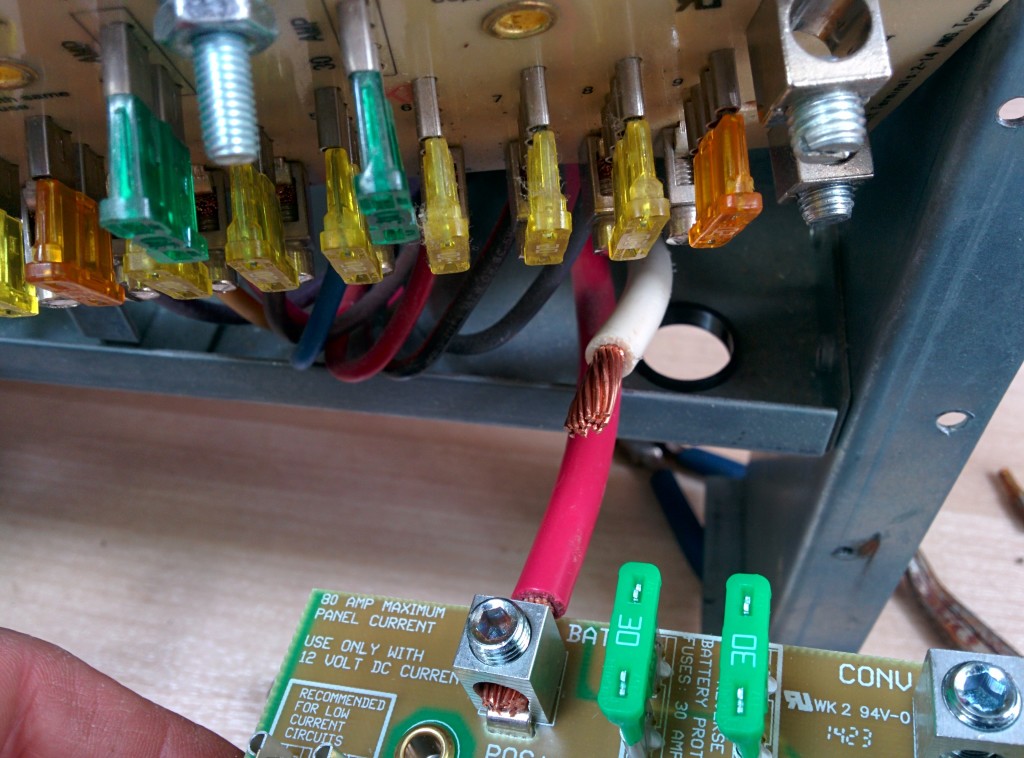
I used only a screwdriver (with a few assorted tips) and a pair of pliers for the install. The instructions included with the new converter were pretty clear. I removed the old converter, and then moved all the wires from the old DC distribution board to the new DC distribution board. This was the most difficult part, because the old board had the connections on the bottom of the front panel, and the new board had the connections on the top of the distribution panel. Wrangling the huge-gauge wire was a little hard, but manageable.

The only thing I did different from the instructions was pull out the whole power center unit (only a couple of screws) so that I could loosen the clamp around the wires to the battery. With loose wires, I could manipulate them into their new routing path around the top of the board. Getting the new distribution board screwed back into place took some finagling, as I needed to get the wires positioned just right, and the large-gauge wire was difficult to bend.

Done

After finishing the wire connections, I reconnected the battery and started up the generator. It worked! The new converter board has a LED light on it which indicates it’s status. Constant means bulk charging mode, fast blink means trickle charge (last 90%), and a slow blink means float mode.

It is worth noting that the LED is on all the time, even if no AC is connected and no charging is occurring. For the past few weeks, the light has operated as my poor-man’s battery monitor, at least in the higher stages of charging.

So that’s all there is to it! For only $200ish, I have can reduce my generator time and avoid cooking my batteries.