Categories
Faith Musings of Sam

Gospel applications on the Slickrock Trail

wpid-14306899302140.jpg

During our stay in Moab, Utah, we were camped only 1,500 feet from the start of the Slickrock Trail. This particular trail is unique, with nearly the entire trail travels across the sandstone rock that makes up the landscape. The trail itself is grueling and difficult, but also includes a practice loop of much more approachable difficulty. I had the pleasure of riding this loop several times during our stay, and on my second ride, I had a realization.

Riding most mountain bike trails is fairly easy. Trail activity produces a path through the dirt and rocks that is generally easy to follow. The sandstone of the Slickrock has nearly no dirt, and therefore no tracks. You can faintly see a worn section of path, but it is difficult to follow at riding speed. To help riders follow the route, a white dashed line has been painted onto the surface of the rock.

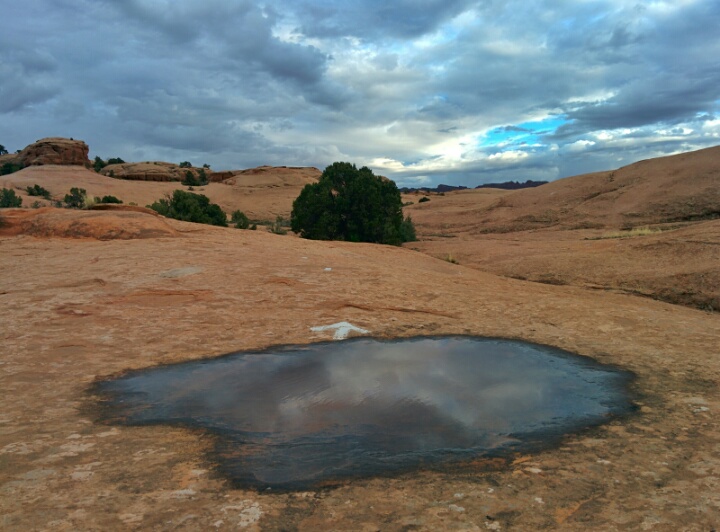
Between my first and second ride of this loop it had rained. Water pools in depressions in the sandstone and remains until dried by the sun. As I followed the white dashed line across the rock, I encountered such a water pool. Dry during my previous passing, the white line of the trail traveled right through the center of the water pool. To follow the line, I would have to travel directly through the pool of water.

Right there on my bike, my mind immediately flashed to the ancient prophet Lehi’s Vision of the Tree of Life. In his vision, The Tree of Life represented the Love of God, and the blessings of living the Gospel. Leading to the tree was a straight and narrow path. Along the path was a rod of iron, representing the Word of God.

The imagery is clear. To receive the benefits of the Gospel of Christ, we must travel on the straight and narrow path and cling to the Word of God. The path and the rod will guide us there.

In Lehi’s Vision, both the path and the iron rod traveled through a mist of darkness on the way to the tree of life. This mist of darkness represents all the difficulties we encounter in life. These difficulties are distracting, disorienting, and discouraging. Only by clinging tightly to the rod can we hope to remain on the path through the mist of darkness. It can be tempting during difficult times to think that we have a better path. If we let go of the rod, we can navigate around an obstacle and rejoin the path later on. Doing so carries the danger that we will not be able to rejoin the path, or will encounter incredible difficulties in making it back.

When following the Gospel of Christ, the best plan is clearly to never let go. If we never stray from the truth he taught, we will never have to find our way back. We cannot expect our journey to be easy. There will be portions that travel through the mist of darkness, and perhaps even pools of water.

Now, let’s not stretch this analogy too far. The white line on the Slickrock Trail is not intended to be followed to the inch. It is necessary along the trail to find your own route around and over obstacles, staying within a reasonable distance of the line itself. Wanting to avoid getting mud on my bike and wet myself, I just rode around the pool of water.

The Gospel of Christ IS intended to be followed as exactly as we can manage. Christ is The Way, The Truth, and The Life. Following Christ has added a richness to my life and led me to to true joy and help through my struggles. May we commit ourselves anew to studying the Word of God and never letting go.

Categories
Daily Life

The Good and Bad of Spring Break

Jr. Ranger Class at the Grand Canyon

Spring break is a wonderful time for family adventure. I’ve watched the past few weeks as friends have taken trips to a variety of destinations. I love seeing their adventures, knowing how much our own adventures have blessed our life.

For full-time travelers, spring break represents the beginning of a complicated process. During the winter months we enjoy the luxury of empty campgrounds, no need for reservations, and an infinitely flexible schedule. Spring break brings forth a flood of ‘normal’ people, making the most of their week off work and school. Campgrounds fill up, venues are busy, and traffic abounds.

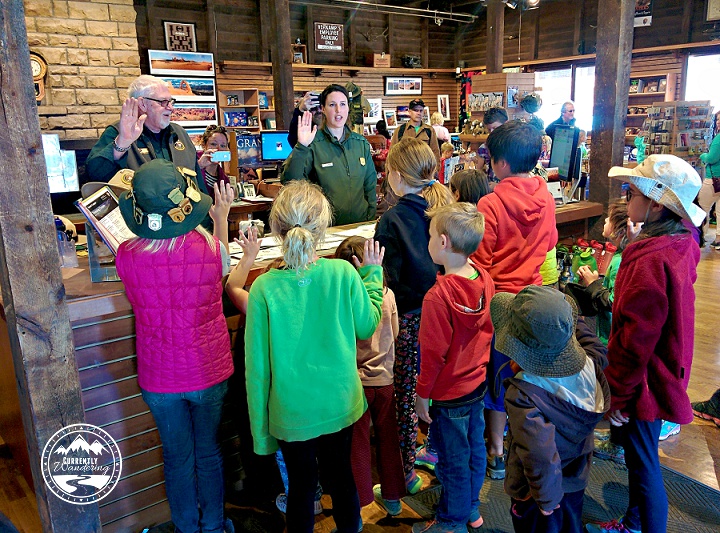
This year, we saw both ends of this phenomenon just a few days apart. We visited the Grand Canyon during Spring Break season, and though the visitor count was surely on the light end of the scale it felt busy and crowded. There were at least 15 kids all getting sworn in as Jr. Rangers at the same time! We also visited three other National Monuments in the Flagstaff area. While not as crowded as the Grand Canyon, there were definitely more families out and about.

In a funny twist of events, while walking one trail at Sunset Crater National Monument, we chatted with an elderly Swiss couple that has been in the United States for a few months. They looked at our group of 7 kids (between two families), smiled, and asked “Spring break?” with a slightly confused look on their faces. I nodded and said “Yes” while they responded with, “But spring break was last week in New Mexico!” We then had an entertaining conversation about how “Spring Break” occurs anywhere from March- April and chances are it’ll be Spring Break somewhere during that time and even follow us full time travelers around!

In contrast, just a few days later we visited Navajo National Monument on our way out of Arizona. The park is so far out of the way that there is no admission fee needed. Though we were not the only visitors, most of our time in the visitor’s center, on the trail, or at a viewpoint was spent with just our family.

I’m grateful that we can visit so many beautiful places without navigating the crowds common during peak season. Our visit is more relaxed. I’m able to let the kids roam further and worry less about losing them in a crowd of having them bother other visitors. These quiet times exploring new places is what really seems to bind us together as a family.

Categories
Arizona

The Queen Mine Tour & the Bisbee 1000 in Arizona

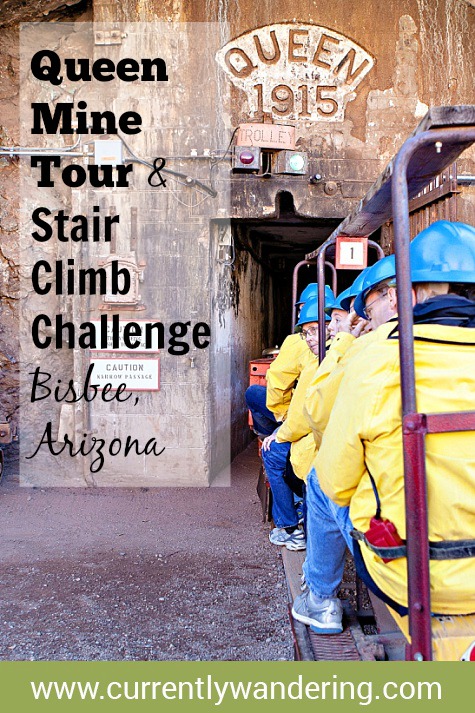
The town of Bisbee, Arizona has been on our list for quite some time as we’d seen other full time travelers pass through and really enjoy it. Though we would typically take the Airstream and spend a few days there, we weren’t able to get reservations at the only RV park in town. Instead, we visited in a day trip from our boondocking spot near Tombstone (about a 30 minute drive). The main attraction for us here was the Queen Mine Tour, but the city itself was an added bonus.

When We Visited: February 27, 2015

Ages of Kids: 9, 7, 4

Where We Stayed: Dry Camping spot outside of Tombstone, AZ

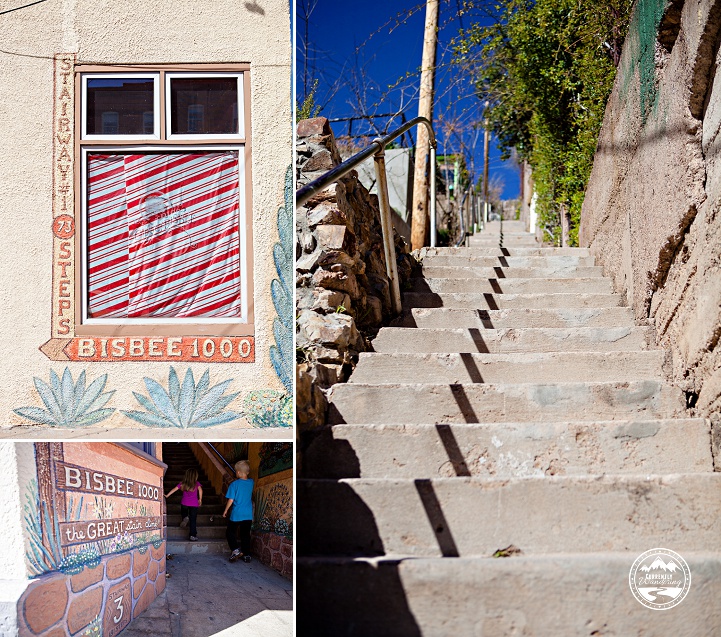
We had made reservations a few days earlier at the mine, and confirmed them upon arrival. We showed up early and attempted to get an earlier mine tour, but they were sold out. Apparently, reservations are definitely recommended! With more than an hour to spare, we wanted to explore town a bit. We learned from the Watsons that a yearly event in Bisbee is the Bisbee 1000 Stair Climb. Though the event is held but once a year, you can follow the route that weaves through town.

We procured a pamphlet from the rather reluctant lady at the visitor center desk (isn’t it her job to be helpful? We were confused), and set out to find parking closer to downtown. Really, we could have walked as it was that close, but since we were about to climb hundreds of stairs, we figured we’d give the kids a break.

The 1000 Stairs route was wonderful. Bisbee was founded as a mining town, not as a convenient place to build. The town sits mostly up and down the hillsides surrounding a very small downtown area. The roads weave chaotically up and around the houses and buildings. The many flights of stairs provide vertical connectors between the roads. Most of the staircases have nearby paintings marking the route, painted right onto nearby buildings or retaining walls.

Bisbee Arizona_01

Following the route led us through parts of the town we otherwise would have never seen. It was a great little introduction to the town, passing through both residential neighborhoods and along downtown shopping streets.

Before we knew it, we were out of time. We only completed 6 or 7 of the stair segments before we headed back to the truck and to the mine for our scheduled tour.

Bisbee Arizona_22

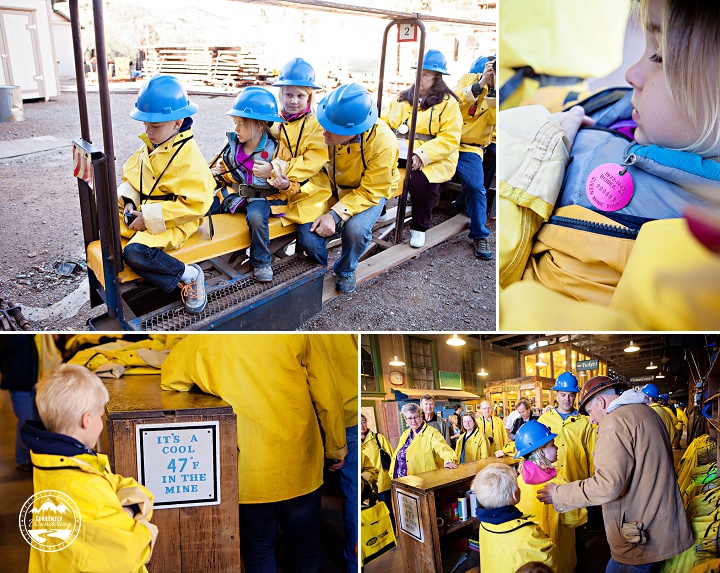
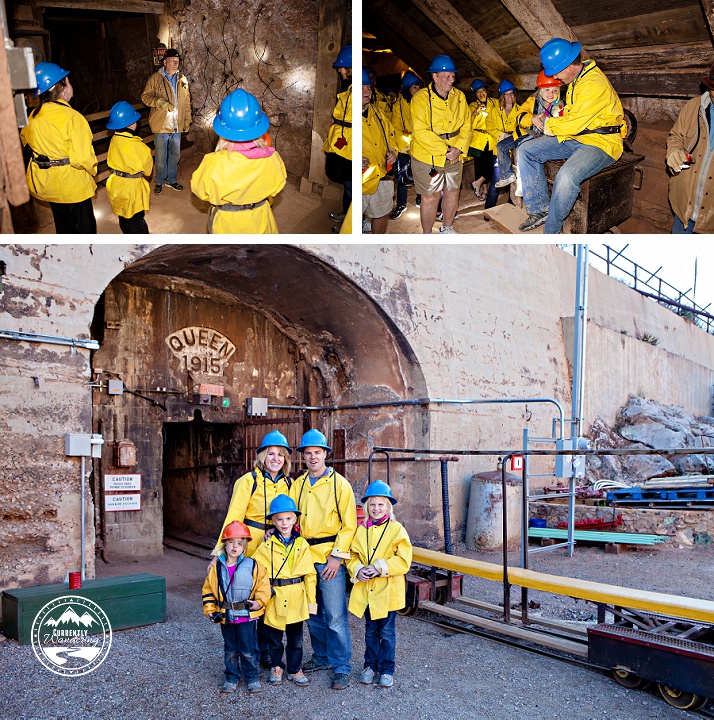
Getting ready for the mine tour was a process of production line gear fitting. We were each dressed in a raincoat, a leather belt, hardhats, and lights. The men handling the gear were both efficient and friendly, easily handing our undersized minors size needs.
Bisbee Arizona_11

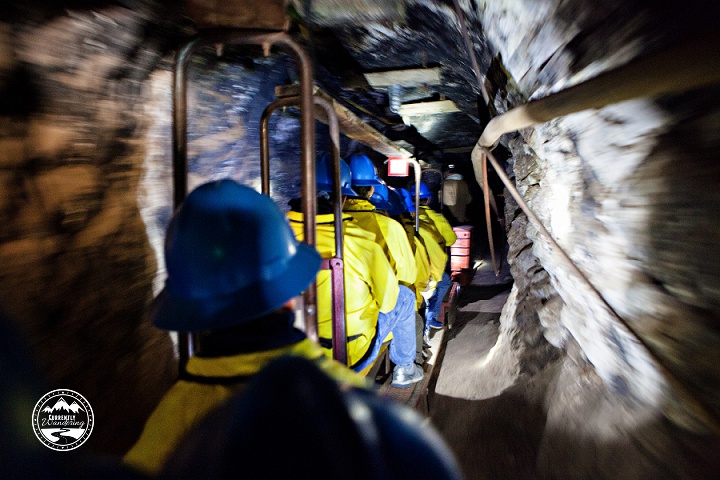
The tour starts by riding a train into the mine itself. Straddling the train was easy for all of us, and left our hands free to point our lights wherever we wanted. The kids loved having their own lights, and none of them was scared riding the train or walking around inside the mine.

The tunnel we entered was an old main entrance. In preparation for public tours, the spaces we visited had been augmented with additional safety precautions, but it did not destroy the experience. In places, mining drills and gear had been set up for the tour in places not used during active mining. I felt the tour/authentic balance was perfect. It gave us a real sense of what mining was like, but I never felt that we were in any danger.

Bisbee Arizona_16

The tour was given by a former miner of that very mine. He was both entertaining and informative during the stops we made inside the mine. We learned how dynamite was placed and the fuses were timed to produce the best possible explosion for mining operations. We even got to ‘demonstrate’ the toilet cart that they had inside the mine, though Cara was a bit nervous to sit up on the seat with me.

Bisbee Arizona_18

We all loved the mine tour, kids and adults alike. If you happen near Bisbee, I would highly recommend the tour!

For some added entertainment, watch the video we recorded and posted to the CurrentlyWandering YouTube channel!

Categories
Solar & Power

Solar Power Upgrade Part 2: Self-Install Combiner Box

image2
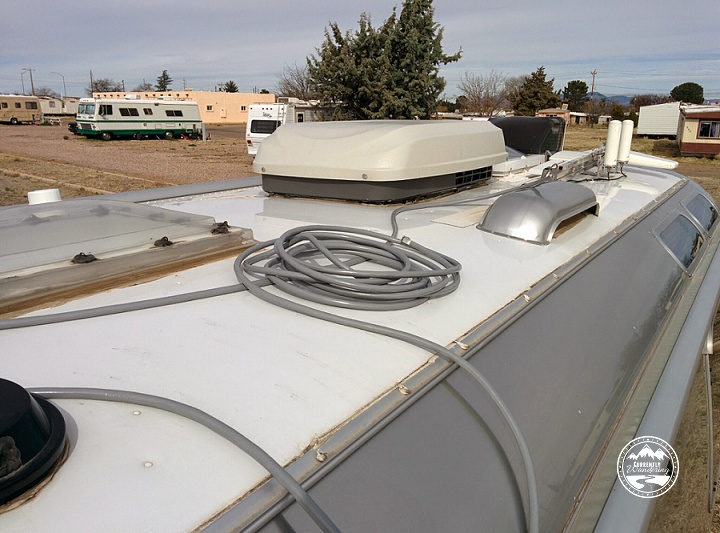
At this point of the install, each panel was mounted on the roof, with a wire connected to each panel and routed along the roof to the fridge vent. The next phase of the project requires connecting the three panels together in what is called a combiner box. Each of the negative wires are connected to a negative bus bar, and the positives to the positive bus bar. This effectively wires the panels together in parallel, which is a better setup if one of your panels ends up partially in shadow.

Two combiner boxes are possible here. If you plan to drill a hole through the roof to run the wire, a roof-top combiner box is what you need. This is the method you want to use if you plan to use the pre-installed wire many Airstreams come with for solar. I’ll explain later why this is probably a bad idea.

The second type of combiner box is called a fridge combiner box, and is used when you will be running the wire down the fridge vent instead of drilling a hole directly in the roof. Because of the type of refrigerator used in most RVs uses a heating element often powered by propane, there is usually ventilation placed above the fridge. This offers a convenient way to get cables inside without drilling holes, and is indeed the method I used to get three antenna cables inside. The fridge combiner box mounts with VHB tape and screws to the side of the fridge vent, and a hole is drilled to run the wire down the space behind the fridge and to wherever you need to route it.

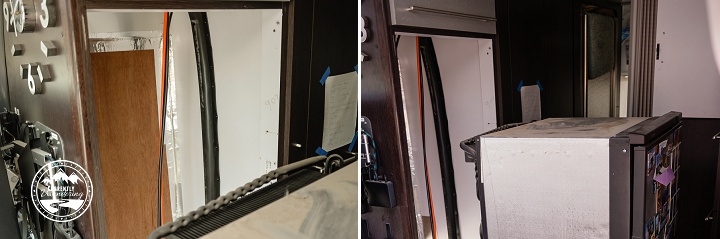
The instructions provided by AMSolar are really quite good, but they really fell over during this phase of the install. The instructions want you to first mount the combiner box to the fridge vent, and then attach all the wires. This became an obviously bad idea when out of curiosity I tried to stick the 6 gauge wire pair through the indented hole in the combiner box. The wire was not even close to fitting through the hole. (See the image on the left.)
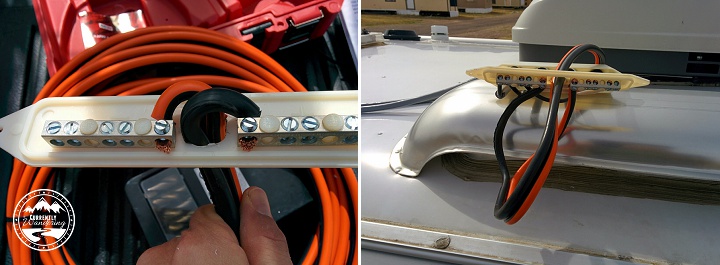
image16

At this point, I used my ‘phone a friend’ option and gave Dave Zimmerman a ring. He confirmed that the hole was ludicrously small and that heavy modification was required. I enlarged the hole with a drill, a utility knife, and most effectively a round file purchased from the hardware store in yet another run. I even went so far as to strip the end of the 6 gauge wires and test mount them to the combiner bars. This helpfully revealed that the hole needed to be even bigger to successfully bend the wires into a space small enough to fit inside the combiner box cover.

Using the combiner box as a guide, I used a sharpie to mark the size of the now-much-larger hole onto the vertical side of the fridge vent. Please excuse the poorly aimed and fuzzy picture. I took that with my spare hand with no reference to aim for a better picture. I could have mounted this box on the street side of the fridge vent, but it would be highly visible and fairly ugly. I mounted it to the opposite side, where it would be nearly entirely hidden from view. This required doing the hole-drilling work while standing high on the 8 foot ladder, leaning heavily on the fortunately sturdy fridge vent cover.
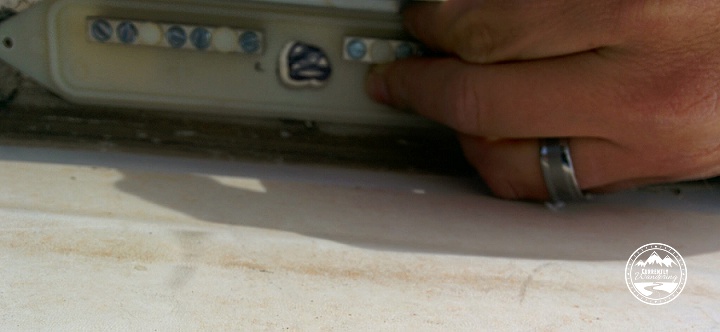
image15

Starting with the drill and finishing with the round, flat, and triangular files I bought in a set, I produced a hole large enough for the wire and dull enough not to immediately slice through the wire’s insulation. Before I removed the refrigerator for the next step, I took the time to wire each panel to the bus bars inside the combiner box. Each panel kit came with a black thing that mounted to the combiner box cover with a hole for the cable. Upon tightening this black thing with a wrench, an internal rubber gasket produced a water-tight seal against the wire to protect it from the elements. Assembling the black things to the combiner box, I pulled the panel wires through the holes and estimated their final length.

Before I proceeded, I wanted to make DARN SURE I was wiring up the panels correctly. I pulled out my little multi-meter and tested the wire from each panel. The test is easy: place the positive probe (red in my case) to the wire that should be positive, and the negative probe (black in my case) on the wire that should be negative. If the voltage reading is positive, you are correct! If the voltage reading is negative, the wires are switched. (Go ahead and switch the probes to see the negative values… it won’t hurt anything). The AMSolar Instructions had me use the black wire for positive and the white for negative, and each panel was wired correctly.
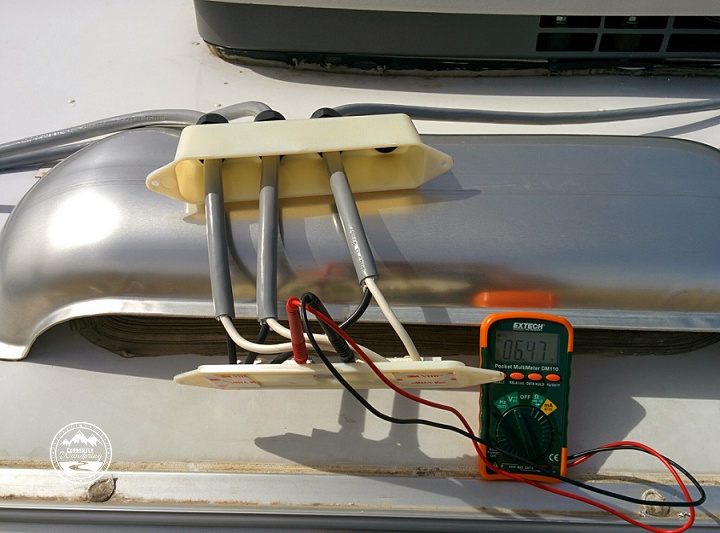
image17

I was a little surprised to see the voltage I did on each panel. Remember that in the first step, I taped a piece of cardboard over the front of the panel to keep generated voltage low. Even with nearly full blockage, I registered over 6 volts per panel! As it was, I was glad to have enough current to verify positive and negative before I completed the wiring to the combiner box.

The combiner box cover wasn’t very large, so the outer insulation of the panel wires needed to be cut to rest just inside the cover. The two internal wires were also insulated, and needed to be cut at odd lengths so that one of the wires could attach to the near bar, and the other to the far. The included instructions actually did a decent job explaining this part. After marking the desired length, I cut the wires to allow for the right length of internal wiring, then set about connecting them to the combiner box. I did this sitting on top of the 8 foot ladder, with the combiner box resting upon the fridge vent cover.

At this point, it was time to pull the fridge. I’ve done this a few times before, and it isn’t as hard now as it was the first time. First, turn off the propane valves on BOTH tanks. Second, I disconnected the DC wires from the back. Wrap those separately in electrical tape to avoid disconnecting power to the entire trailer. Next, pull the AC plug, disconnect the propane pipe, and push the fridge drain hose back through it’s holding strap. Remove the two hex-head large screws holding the metal rails to the floor. Inside, remove the four screws holding the fridge in place. The two screws on the bottom are easy to see and remove. The top screws are a little more hidden. Though possible to remove as is, I find that removing the top plastic piece (that contains the fridge temp display) makes them easier to get to. Keep track of all these screws.

The fridge can be removed by two people and set on the floor in the hallway. We used some of the panel packing cardboard to set the fridge on to prevent any damage to the floor.SAMSUNG CSC
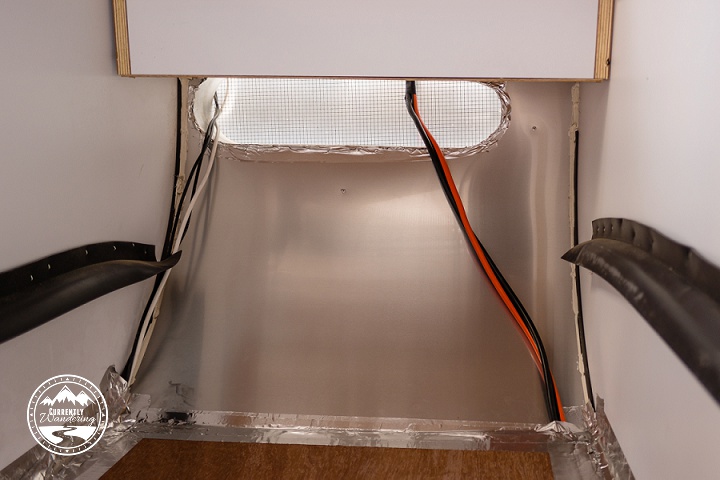
With the fridge removed, I pushed the end of the 6 gauge wire pair through the hole in the fridge vent and went back outside. Back on the ladder, I pulled the wire out far enough to comfortably wire it into the combiner bars. At this point, I was VERY glad I had tested this first while on the ground. With all the wires attached in the combiner box, I removed the tape, applied the included putty around the hole, and stuck it to the side of the fridge vent. I drilled pilot holes and secured it with the included screws.Solar project_18
At this point, nearly all my work on the roof was done. Later on in the process, I used the included zip-ties and sticky pads to secure the panel wires to the roof in a few places. I also sealed around the feet with lap sealant as previously mentioned, and I also removed the cardboard after the wind removed one of them for me.

The next step of the process is running the wire from the fridge vent all the way through the house to the forward wiring compartment. Join me next time for more solar fun!
Categories
Solar & Power

Solar Power Upgrade Part 1: Self-Install Panel Mounting

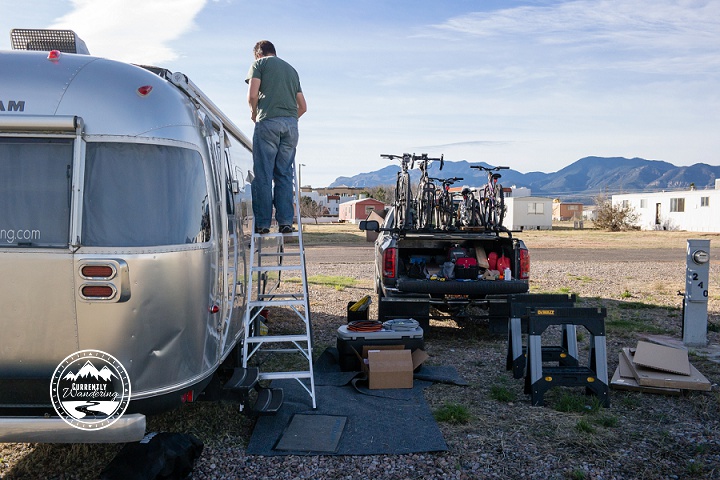
Power Upgrade on our Airstream! Read Part I about mounting the solar panels on the roof!!Our plan to self-install solar was a good one. We planned to mail the solar supplies to a friend’s house, then courtesy park for the install using his garage and tools. As it turns out, our awesome friends Ben and Emily live on an Army Base, with plentiful restrictions that foiled our plans. Our Plan B was a trailer/rv park just outside the base in Sierra Vista.

This RV Park might have been the dodgiest place we have ever stayed. Plenty of the single-wide mobile homes appeared abandoned. The gravel surface was covered with a goat-head like plant that produced painful, spiky stickers. The only benefit to this place was that nobody minded me doing a full solar install while I was there. Plenty of higher-grade RV parks have strict rules against maintenance of any kind, or even washing your RV. If you ever need management to stay out of your way during an install, this is the place!

Our schedule placed us there over the weekend. We arrived Friday, and I picked up the panels and some tools from Ben that night. Having a good plan, I only pulled out the install instructions and gave them a glance that night. Saturday was our Big Install Day, where I would try and get as much done as possible. I also squeezed in a trip to the hardware store, where I bought the cheapest 8 foot ladder I could buy.

We had three 135 watt panels to install, each shipped in it’s own box. The smaller additional box held everything else. The AMSolar people did a great job packing everything, and had included plenty of extras that made the install nice and easy. Crimp connectors, wire, heat-shrink tubing, and wire labels were all included in nicely labeled bags.

According to plan, the first step was to mount the panels on the roof. Using the sawhorses I borrowed, I pulled out each panel to install the rocker feet. The instructions were clear and easy. Each rocker foot had the 3M VHB (that’s Very High Bond) tape pre-applied. Before working with each panel, I taped one of the packaging cardboard pieces over the front. It was a sunny day, and I wanted to keep the panels from generating much electricity. For the first panel, I mounted the feet, then climbed up the ladder and set the panel on the roof. It fit nicely, and gave me some confidence that this whole crazy thing would work.

Solar project_15

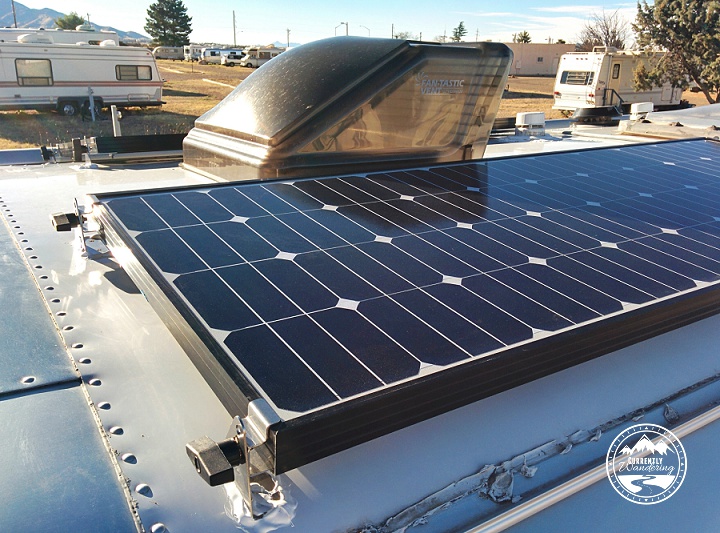
The rocker feet sold by AMSolar (and included with the panel kits I ordered) were perfect for an Airstream roof install. The feet have a flat bottom where the VHB tape bonds with the roof. Three mounting holes provide a few height options, and a screw handle attaches the rocker foot to the mounting bracket that you install on the corner of each panel. The ‘rocker’ part of the foot is that the angle can change, allowing the panel to be mounted not entirely parallel to the surface of the roof. For a curved roof, this allows the foot to securely mount to the panel AND to the roof surface. Optional tilt bars allow easy tilting of the panels if you desire a better angle, and can be easily used by detaching the panels from the rocket foot and secured to the tilt bar at the desired angle. I’m not a panel-tilter, but it is a very nice option if you are.

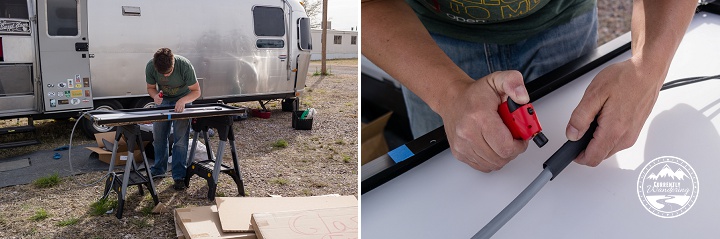
Jess joined me outside to help me as much as possible. Despite much of the work being kind of a one-man job, the panel mounting was a perfect time for some extra help. I began to attach the UV-safe wire to the panels, route it on the roof over to the fridge vent, and cut it to just a bit longer than I thought I’d need. I tried to melt the shrink-wrap tubing using my wife’s 1800 watt hair dryer, but it just wasn’t hot enough. A quick trip to the hardware store yielded a small butane torch which managed to do a good-enough job. The AMSolar included instructions were also helpful here, helping me cut and strip the wires to the right length to attach them to the connectors mounted on each panel.Solar project_13

We began mounting the panels, first by marking the position of each foot. We then shifted the panel enough to clean the roof where the pad would attach. I used rubbing alcohol and a paper towel, and some elbow grease. We cleaned a generous size to make placement a little easier. The ladder I had was not one of the cool ones that you can climb up on both sides, so I was the only one on the ladder to mount the panels. After moving the panel into position, I propped up one end of the panel with two of the cardboard corners that came in the packaging of each panel. These held the panels high enough for me to peel the plastic off the VHB tape on those two feet, gently remove the cardboard supports,  and then lower the feet onto the roof in the desired place. I then moved the ladder to the other end of the panel, and repeated the process.

The rocker feet from AMSolar have three holes you can use. I experimented a bit with the first panel, and decided that the lowest setting gave me the clearance I needed to route the wires underneath. Being as low as possible would minimize the effect and force of the wind the panels would experience. During my purchase, AMSolar offered to sell me feet that were taller and would allow me to mount the panels to be flat on top despite the curved surface of the Airstream roof. I declined, as I wanted the panels to be angled slightly to follow the curve of the roof and keep the profile low.

At this point, I should mention a mounting option used by Dan of Malimish Airstream. Dan purchased a second set of rocker feet for each panel, and mounted the L shaped feet back to back at each point. This provided twice the surface area of VHB mounting tape with minimal fuss and nearly no additional work. Had I known/thought about his mounting option I would have done it. Overkill? Maybe, but inexpensive and easy.

IMG_20150223_162758_1

I mounted all three panels with wires attached. Before the project was over, I used Dicor Lap Sealant to seal around the edges (and screw holes!) of each rocker foot. I should note that the picture above doesn’t show the full lap sealant application, as I also covered the top of the foot to cover the spot where the tape can be seen through the screw holes. But I’m getting ahead of myself, and I’ll cover that later. The next step of the project is wiring the panels into the combiner box.