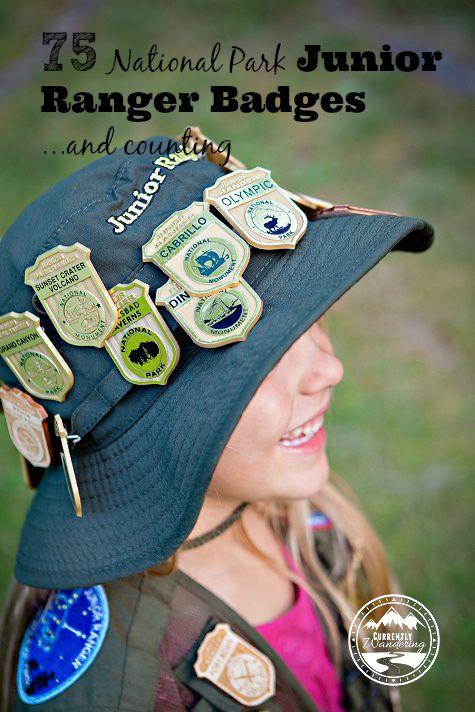
I often lose track of how many Jr. Ranger badges my kids have earned which got me into a little trouble when we hit 50 and didn’t know it. 50 badges seemed like a good milestone for celebrating and the kids were a little disappointed that we had skipped it.
“How about 70? 75?” I asked instead. “We could have a party.”
Knowing we were getting close, I kept a little better track in the last few months and last week the kids earned their 75th Jr. Range badge at the Northern Great Lakes Visitor Center near Ashland, WI. I’m so proud of them. Some of these books are pretty easy, but others take quite a bit of work and effort to complete. (See our list of badges here.)
There was also those couple of weeks in Arizona earlier this year where they earned 3 one week and then another 5 two weeks later. I think we were all Jr. Rangered out after that for a little while!
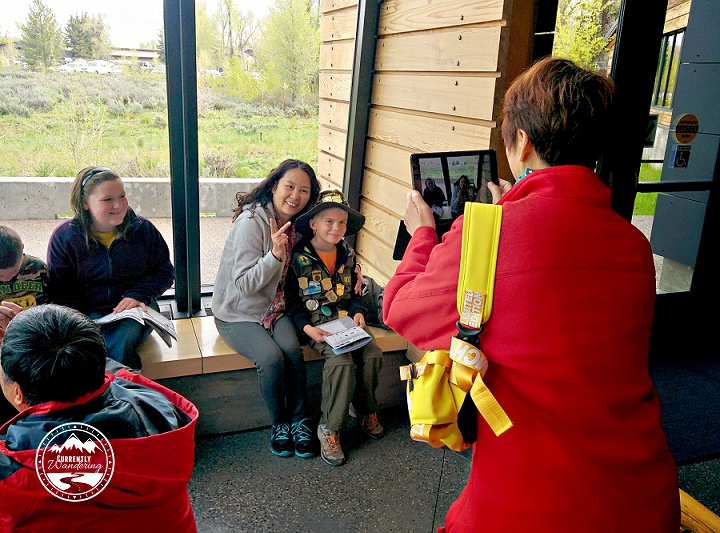
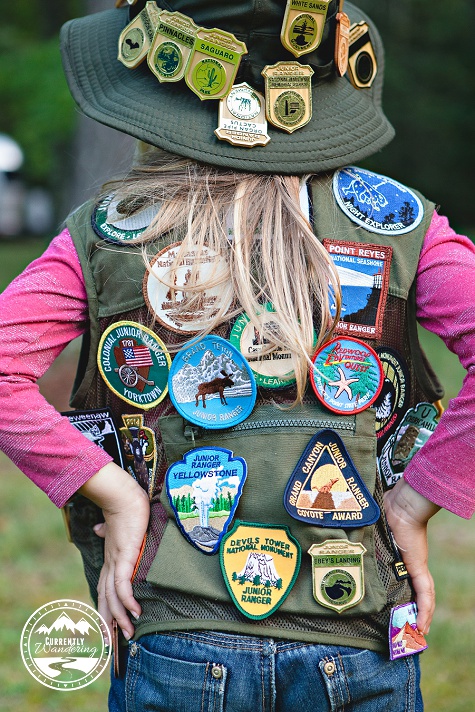
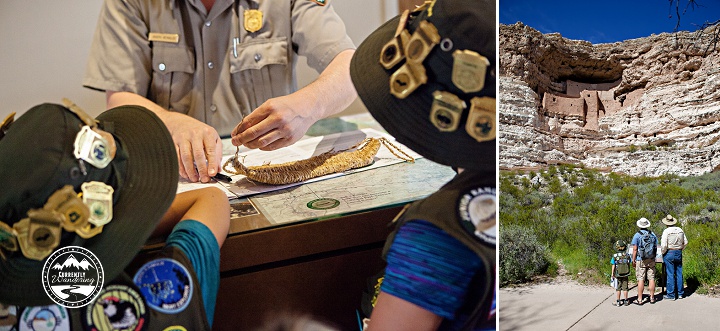
I encourage the kids to wear either their badge covered hat or vest when we pass off a new badge. Sometimes they get embarrassed because complete and total strangers want to take their photos, but I find that most rangers really appreciate seeing kids excited about the program. Its almost like a “thank you” to them for all the hard work they do to educate kids about our nation’s awesome parks.
Jr. Ranger badges also count as “school” for the day. Instead of doing their regular book assignments, we’ll count the badge as they often include history, geology, biology, reading comprehension, physical activity (hiking) and problem solving. Plus, we are usually outside exploring and getting my kids outside for school is always a plus!
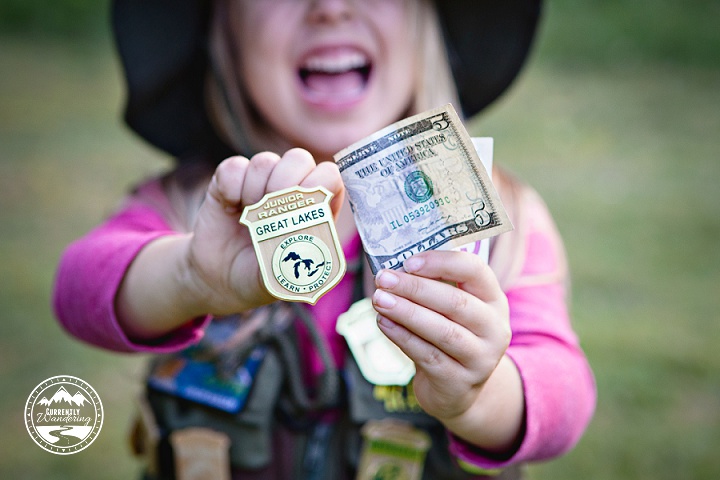
As an incentive, and encouragement to keep going we gave the kids each a $5 bill upon earning their 75th badge. This went over super well (I think its the most money they’ve ever physically had at one time), and the kids are still contemplating what they will be spending it on.
“How about we get $10 once we reach 150 badges?” they suggested.
I’m not sure we’ll raise the stakes that high, but I think $5 every 75 badges could go a long way to keeping them motivated!
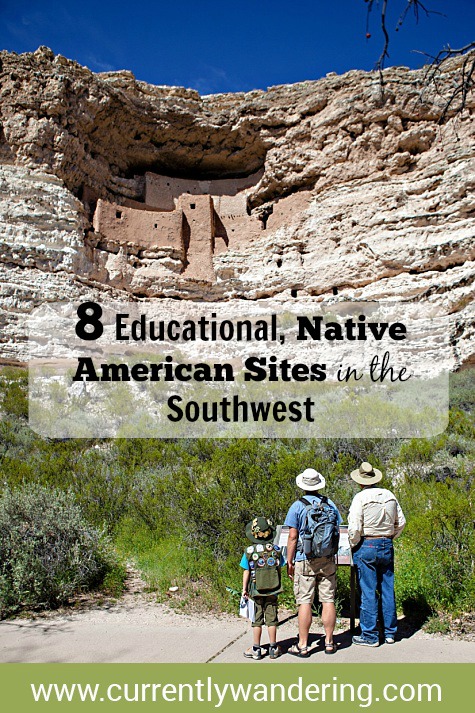
We did a semi-unintentional Native American Unit Study this winter as we wandered around Arizona & Southern Colorado. This area is full of history, artifacts and culture and we enjoyed all of it!
We hit the first one on our own after leaving Phoenix, then we had Sam’s dad join us for the two near Cottonwood as he was driving through and wanted to see his grandchildren. We picked up 3 during Spring Break with our friends in Flagstaff, AZ and then hit the other two on our way north as the weather warmed up.
Surprisingly, none of my kids got bored or had a “we’ve already seen this” attitude. Each place was unique – whether it was a cliff dwelling tucked into the side of a mountain, or a veritable fortress built on top of hill. This made it fun to compare and contrast and learn about the different ways these ancient people lived.
When We Visited: Spring 2015
Ages of Kids: 10, 8, 5
1. Tonto National Monument – Roosevelt, AZ (nps.gov)
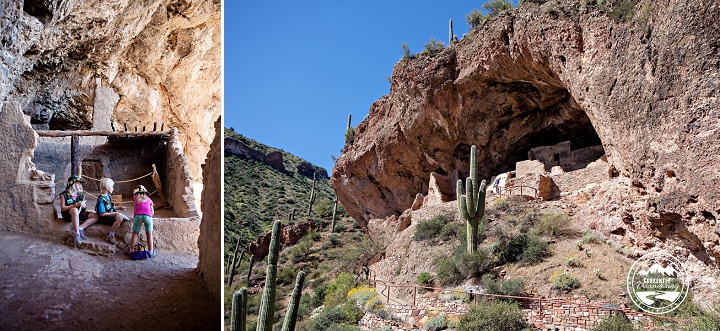
We visited Tonto National Monument while staying at nearby Roosevelt Lake. The kids and I took a morning and drove the 20 minutes from our campsite to the Visitor Center. After getting our Jr. Ranger books, we worked on them, watched the video, and then hiked up the trail to the actual ruins.
These guys knew how to build a house with a view:
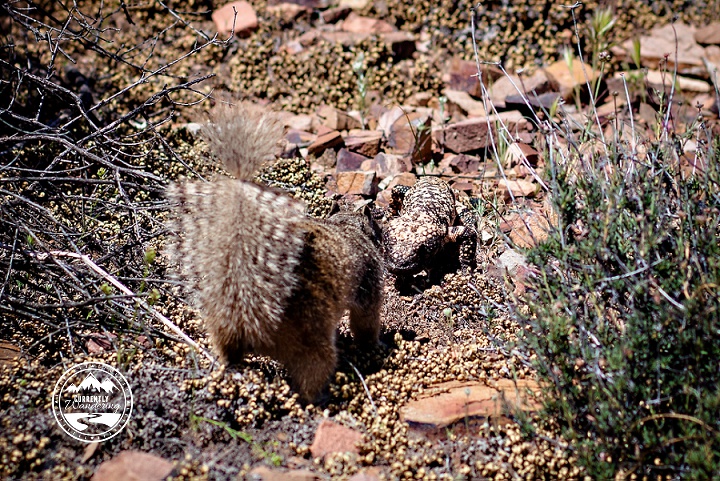
The BEST part about the whole day was being told by the volunteer that someone had just spotted a Gila Monster next to the trail. We raced down and saw this showdown going on:
We sat and watched for at least 15 minutes. The Gila Monster preys on young animals, so we assumed the squirrel had a nest somewhere under the bushes she was protecting. The squirrel was way too fast for the slow moving Gila Monster and she succeeded in pushing him farther and farther away. It was fascinating!
2. Montezuma’s Castle National Monument – Camp Verde, AZ (nps.gov)
This was a short trip from Dead Horse Ranch State Park in Cottonwood where we were camped for a few days. Sam’s dad was driving through from Philmont Scout Ranch in NM and joined us for a day of exploration. We were there maybe an hour, and the ruin are just a short (paved) walk from the Visitor Center.
3. Tuzigoot National Monument – Clarkdale, AZ (nps.gov)
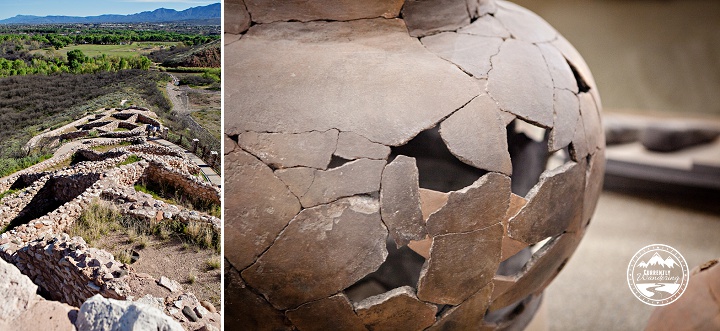
North of Cottonwood and maybe 10 minutes from Dead Horse Ranch SP is another National Monument. Tuzigoot is a set of ruins built on top of a hill, rather than into the rocks on a cliff. My favorite part was the pottery they had found and pieced back together. Plain jars for everyday use, and fancy, colored ones for trading. This made TWO Jr. Ranger Badges in one day. My kids were not happy with me.
4. Walnut Canyon National Monument – Flagstaff, AZ (nps.gov)
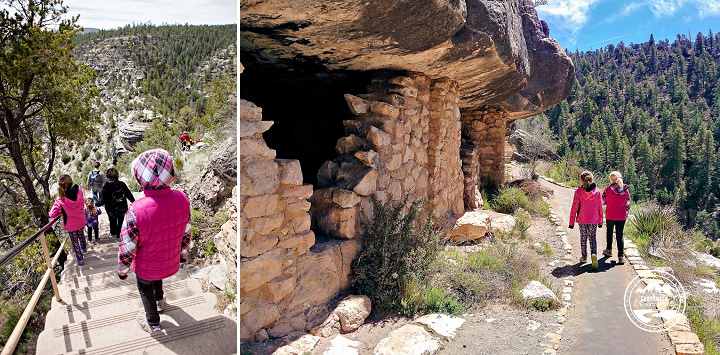
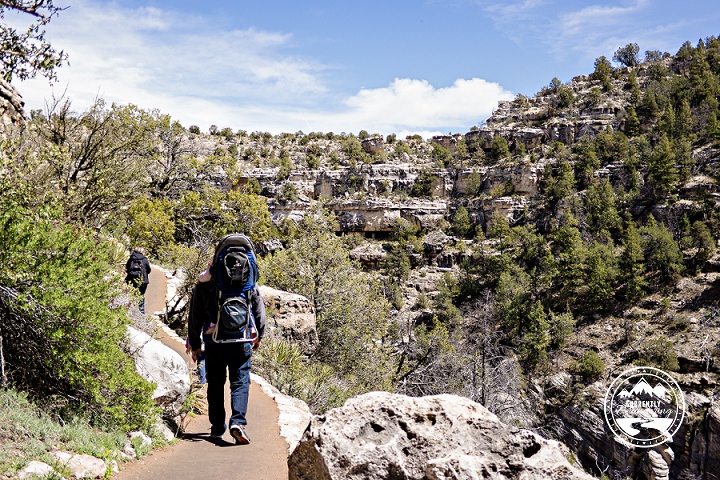
We drove to Walnut Canyon from nearby Flagstaff where we were celebrating Spring Break with our friends from Lehi, Utah. This set of ruins is positioned in a horseshoe curve in the canyon and there are dozens of ruins all up and down the walls of both sides. We hiked down the stairs and took the walking path around the middle of the ‘island’ in the middle of the bend. I loved how up close and personal we could get with the ruins. This was probably my favorite!
5. Wupatki National Monument – Flagstaff, AZ (nps.gov)
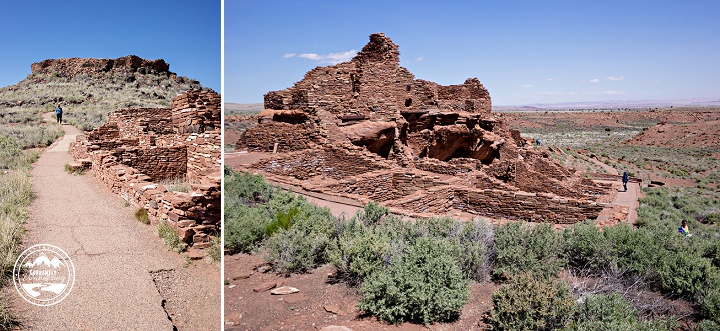
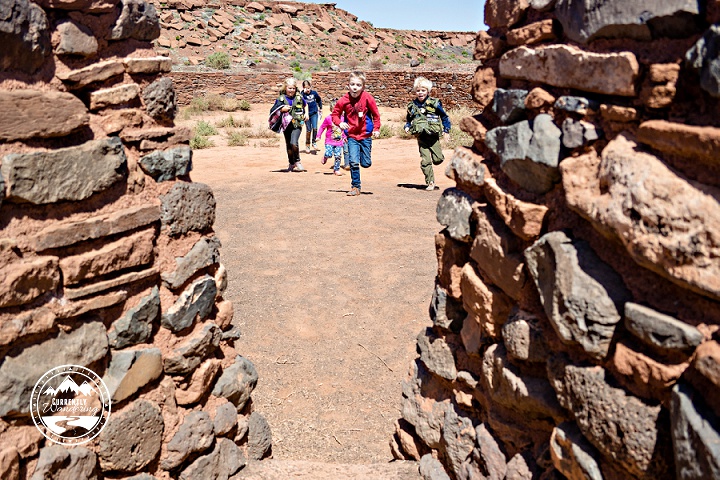
Another day we drove north from Flagstaff to hit both Wupatki and Sunset Crater National Monuments. Wupatki is probably the largest ruin we saw, and the ball pit was a favorite of the kids. We could only imagine the types of games they played there!
6. Sunset Crater National Monument – Flagstaff, AZ (nps.gov)
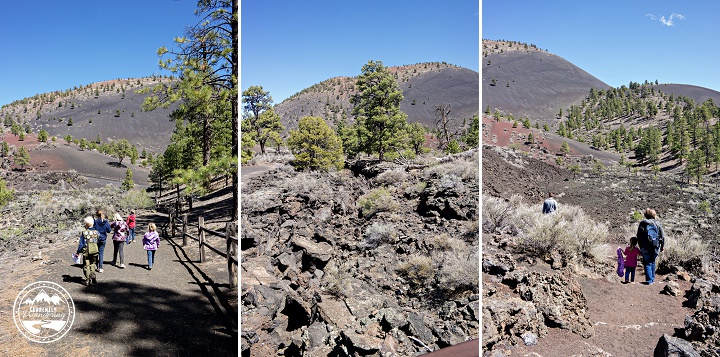
Turns out you can pick up the Sunset Crater NM Junior Ranger book at Wupatki, which was great since we hit the Lava Flow before the Visitor Center. Having to drive down and back up just would’ve been annoying. The jagged, volcanic rocks were fascinating and we had fun identifying the different types. We completed this trip at the Visitor Center where they finished up and passed off their books.
7. Navajo National Monument – Shonto, AZ (nps.gov)
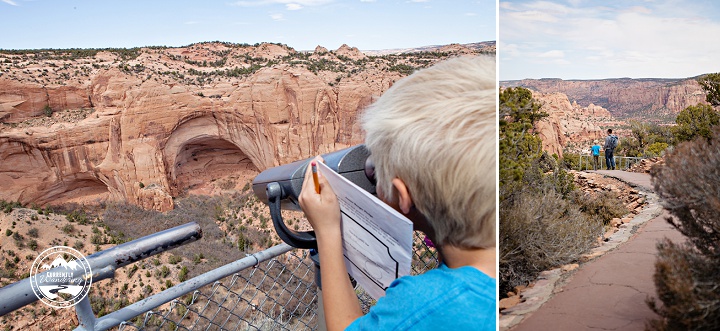
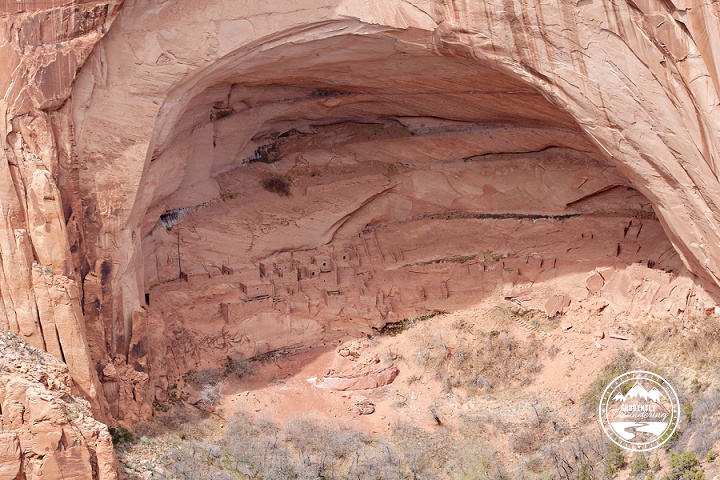
Instead of paying extra to visit Monument Valley or Valley of the Gods (both on tribal lands where our America the Beautiful Pass does not get us in for free) we opted to stop by the lesser-known Navajo National Monument instead. Not too far out of the way between Flagstaff, AZ and Cortez, CO this place is a gem. They also offer backcountry camping where you can hike down to the ruins, participate in a ranger led tour, stay the night, and then hike back up. Definitely on our list for the future!
8. Mesa Verde National Park – Mesa Verde, Colorado (nps.gov)
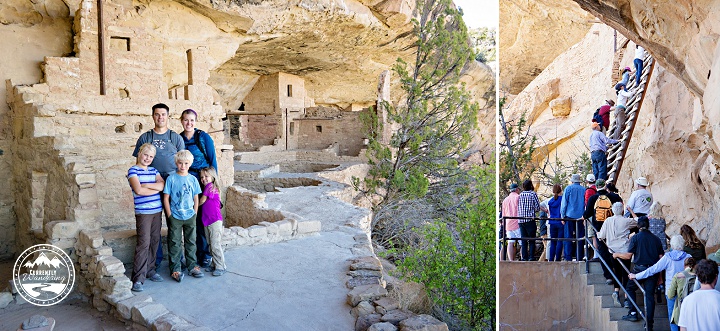
This site took us out of Arizona and into the southwestern part of CO, but it was close enough in time frame that I’m going to toss it onto the list. Plus, Mesa Verde is just really awesome. Its a fairly big park, but there’s a Visitor Center before you even reach the fee booth and you can sign up for tours, get your Jr. Ranger Badge books, and explore the exhibits. Cliff Palace was undergoing extensive construction, so we opted for the smaller Balcony House Ranger led tour. Super proud of our kids for climbing the tall ladders. We have a YouTube video about our tour you can check out below.
There are a few other sites that would fit well into this unit study as well, but honestly, after we finished up with Mesa Verde were mentally done with Native American dwellings for the time being. Hopefully we’ll be able to visit this other ones sometime in the future. If you’ve been to any of these locations, please tell us about your visit!
Hovenweep National Monument – Southern Utah (nps.gov)
Gila Cliff Dwellings National Monument – New Mexico (nps.gov)
Canyon de Chelly National Monument- Chinle, AZ (nps.gov)
Bandelier National Monument – Los Alamos, NM (nps.gov)
It’s no secret I’m obsessed with cactus, and turns out that obsession extends to the whole of the Sonoran Desert. I love how all the animals & plants have special adaptations to survive, and despite the original hostile seeming environment, the Sonoran desert is actually green & beautiful! This year, we even timed our travels well enough to see some of the cactus bloom! Be still my beating heart.
Through all our travels & adventures we discovered some great children’s picture books that helped all the information we were learning sink in so I thought I’d share with you guys some of our favorites! I’d like to report that I seriously research in advance the locations we travel too and come up with a list of books suitable for each region, but I don’t. This time around we were in the region long enough and just plain got lucky (and I really do love National Park Visitor Centers. That helps too!).
Ready? Here goes!
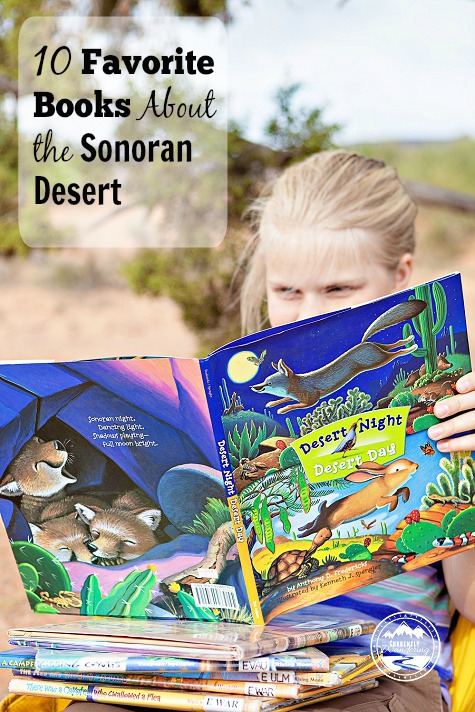
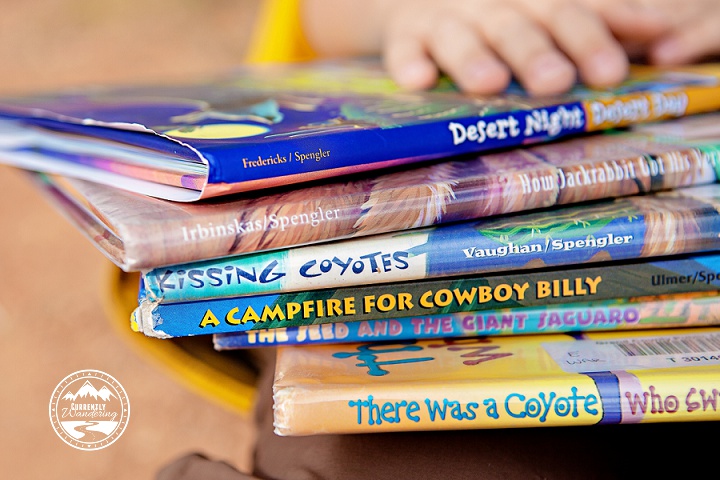
Desert Night, Desert Day by Anthony D. Fredericks & Kenneth J. Spengler – This is my absolute favorite, so maybe it is cheating that I put it first? I absolutely love the illustrations, and my kids love to search for the quail on each page, plus look for the clues as to which animal is next. Simple, elegant, and an easy read before bedtime read.
The Seed and the Giant Saguaro by Jennifer Ward & Mike K. Ranger – With repetitive, building verse, this book follows the life cycle of the Saguaro bloom from being picked up by a pack rat to soaking it’s seeds in the ground to grow into a new cacuts. Super cute, short, and an easy read!
Kissing Coyotes by Marcia Vaughan Kenneth J. Spengler – We found this one at a local library after I asked the librarian to look up other books illustrated by Kenneth J. Spengler. Jack Rabbit is a bit of a braggart and tells the other animals of the desert that he can kiss the coyotes and get away without being eaten! A bit of a longer read, but Cara and I read it together at the laundromat one afternoon and she begged me to read it again.
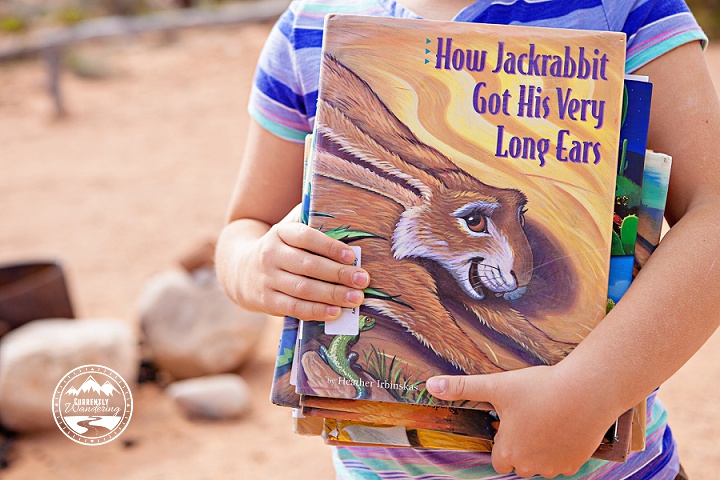
How Jackrabbit Got His Very Long Ears by Heather Irbinskas & Kenneth J. Spengler – We saw this one at multiple National Park visitor centers and were elated to find it at the Grand County Library in Moab to check it out and really read it. Jackrabbit is a bit of a scoundrel and although he’s helping the Great Spirit lead desert animals to their new homes he’s not a very good listener. Another one illustrated by Kenneth Spengler, so its absolutely beautiful.
Josefina Javelina: A Hairy Tale by Susan Lowell and Bruce W. MacPherson – All Josefina wants is to be a ballerina in a big city, so she packs up to live with her cousin Angelina while auditioning for a role. Hilarious story, beautiful illustrations and my kids were all rooting for her to triumph over the evil Mr. Coyote.
Why Oh Why Are Deserts Dry? by Tish Rabe: We picked this one up back in the Mojave Desert, and have enjoyed it over and over for months. In true Cat and the Hat rhyming style, the book details the main deserts across the world (including Antarctica!) and is both educational and fun. Cara constantly tells me about the “watery place in the middle of the desert” aka an Oasis.
Life in the Slow Lane; A Desert Tortoise Tale by Conrad J. Storad & Nathaniel P. Jensen – Maybe because we are living life a bit in the slow lane, this book really tugged on my heart strings. We picked it up at the Visitor Center at Joshua Tree National Park. “Oh – It’s life in the slow lane The slow life for me! The tortoise’s way Is the best way to be!” Slow and simple I couldn’t agree more, although I’ll pass on eating the Prickly Pear!
Way Out in the Desertby T. J. Marsh – We saw the same literary pattern in one of our Halloween books last fall, but that didn’t make it any less enjoyable. We have this one as a boardbook in the car, and Cara is constantly asking Rachel or Andrew to read it to her. My favorite animal? Definitely the javelinas snoozing by the palo verde tree.
A Campfire For Cowboy Billy by Wendy K. Ulmer & Kenneth J. Spengler – A cute little boy pretends he’s a cowboy in a big city. He rides through the canyons (tall buildings), enters the Badlands (Central Park), and avoids the bandits (other kids on bikes). While not based in the desert, you can’t help but admire his imagination.
There Was a Coyote Who Swallowed a Flea by Jennifer Ward & Steve Gray – Cara keeps begging me to read this one over and over! It’s pretty long and based after the Old Woman Who Swallowed a Fly, so very repetitive but also fun. I’m still impressed the coyote swallowed the cactus to go with the chile, to season the bird, to catch the snake…..
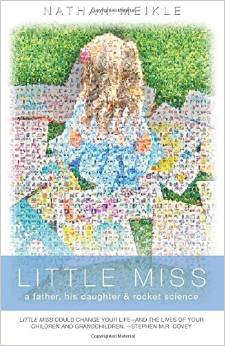
A few months ago, we found out that a college acquaintance of ours had written book. Excited for him, I dug in to find out what it was about and was pleasantly surprised to find out his book is a memoir about teaching his two year old to read. Intrigued, I requested a copy of the book to review and he enthusiastically complied.
I loved it. His story is a journey of teaching his daughter to read, learning how important reading is to young children, and that although we may sometimes worry about “too early”, learning to read is a skill that can never be learned too soon. Opening a world of learning and excitement to kids can benefit them for their entire lives.
He cites documentation and research he completed through this process and has an appendix with a list of their favorite 250 children’s books! Along with the reading journey, he also shares a bit of his personal journey playing football, his dedication to getting a scholarship, attending law school and earning a Ph.D.
While his experience was interesting to read about, Cara is already over two years old so I had a little trouble relating directly to his experience. The biggest take away I received from this book was the desire to sit down and read TO her. I’ll admit, that traveling has put a crimp on read a loud time. Rachel and Andrew go through books so fast that I can’t keep up with them, and Cara just gets left to fend for herself. Picture books are harder to come by through our library’s OverDrive system, so mostly we just don’t try.
After I finished Nate’s book, I put a lot more effort into reading aloud to Cara. We listen to quite a few audio books while we drive, and we read aloud to all of the kids before bedtime, but Cara and I lacked some serious one-on-one time. Its been great! Habits are hard to come by and we still struggle, but we have been doing much better over the last few months.
If you have young kids, or are interested in learning what they did to teach Kayla to read, I definitely recommend checking out this book! Its been a great resource for us and I’m glad that we have it.
We have earned quite a few Jr. Ranger Badges in our travels, but sometimes they aren’t easy to turn in after we’ve visited different areas of some of the larger parks. Luckily, the NPS plans for this as also has the option to mail in your booklets when you get home.
When we showed up at the Hoh Visitor Center in Olympic National Park to find it closed (so annoying) we decided to test out that theory.
Surprisingly, mailing in our booklets was quick, easy, and actually quite fun!
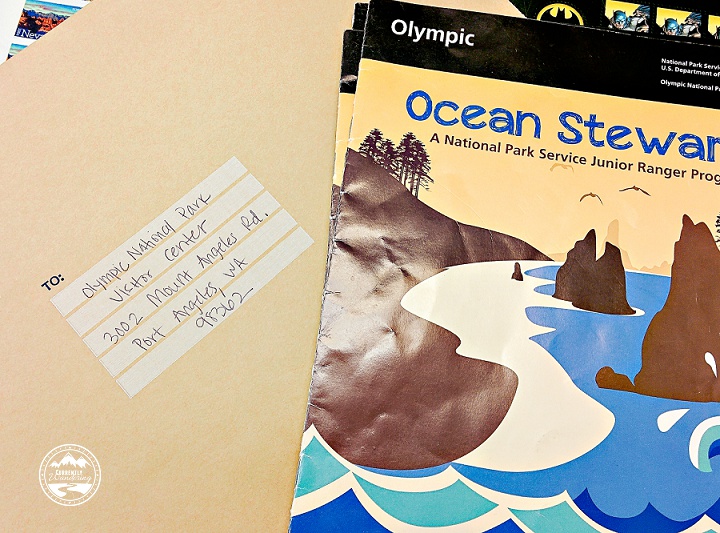
First things first, I called the main visitor center in both Olympic National Park, and Mt. Rainier National Park (where we had picked up our Wilderness Explore 50th Anniversary booklets) to get an address to mail in. I figure I could dig around on the their websites, or just call and get the exact address from a ranger. I had to leave a message at one of them, but they were quick to call me back.
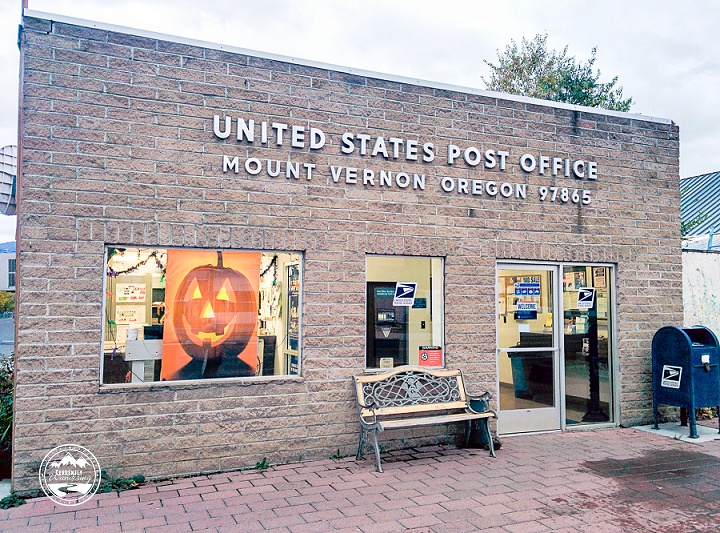
Next up, we took the booklets to the nearest post office. By this time we were in Eastern Oregon, so the closest town was Mount Vernon. Super cute, small town post office. We used Sam’s parent’s address in Petaluma, CA as a return mailing address (indicated on a post-it note inside the envelope) since we knew we’d be there for Thanksgiving and it would give the NPS a few weeks to send us the patches.
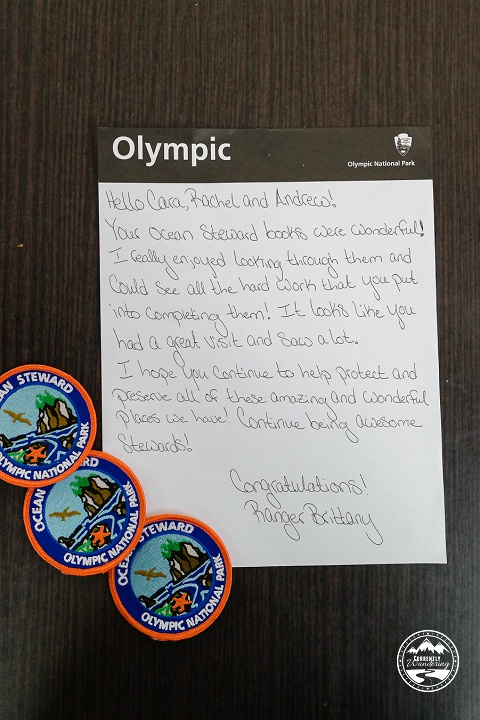
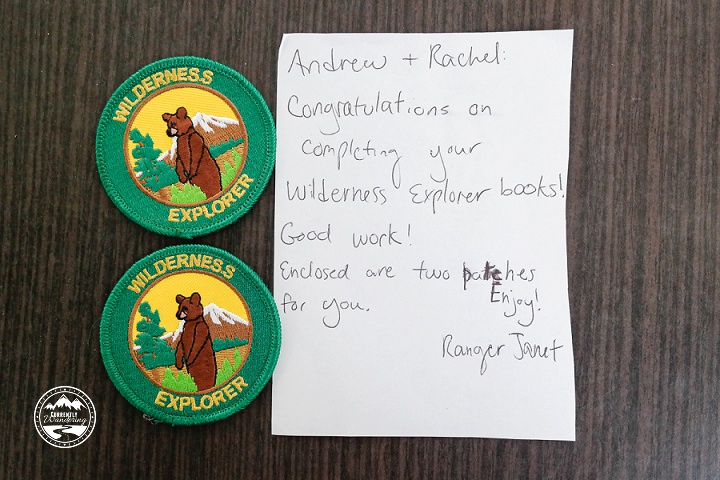
And send them, they did! About a week and a half later, we got a call from Sam’s mom to say we had two envelopes from the National Park Service. The rangers wrote super awesome notes for the kids, including the patches as well as our booklets to keep!
Easy enough, right? It was *almost* easier than taking the books in to be inspected by the rangers. Almost. It would definitely be worth mailing in if you’ve got a younger child that doesn’t make the age cut and you have a stickler of a ranger that refuses to give them a badge. Its never happened to us, but I’ve heard stories!
Short story is that if you don’t have enough time to return to the visitor center (or you are out on an amazing hike and are racing against the clock to get back in time and only just barely make it as the rangers are stepping out of the door for the night – not that we’d know anything about that), there definitely is another option to still get your badges!

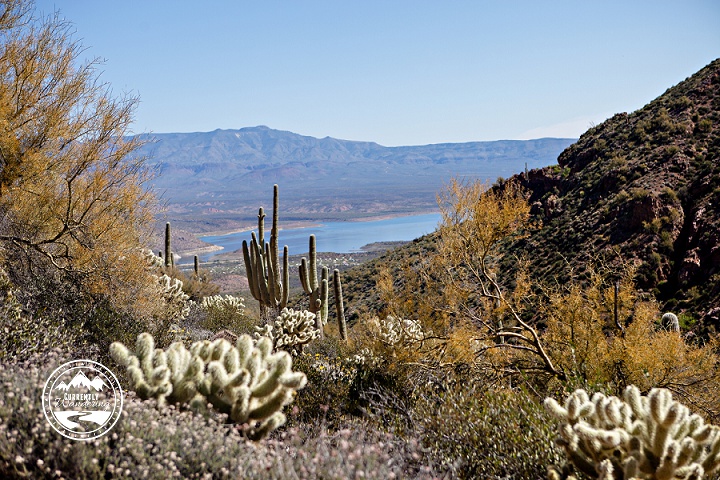
 It’s no secret I’m obsessed with cactus, and turns out that obsession extends to the whole of the Sonoran Desert. I love how all the animals & plants have special adaptations to survive, and despite the original hostile seeming environment, the Sonoran desert is actually green & beautiful! This year, we even timed our travels well enough to see some of the cactus bloom! Be still my beating heart.
 Desert Night, Desert Day