Categories
Airstream Accessories

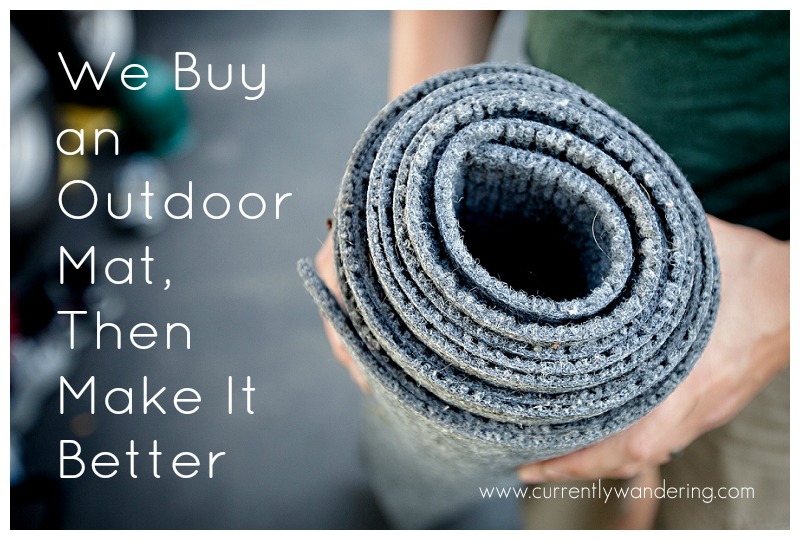
We Buy an Outdoor Mat, Then Make It Better

We Buy an Outdoor Mat Then Make It BetterAs the weather has been getting nicer, we’ve been desiring a larger mat for outside the door. A place to kick off our shoes without getting dusty.

RV Mats are fairly common, and are mostly of the plastic, fan-fold variety. We didn’t love them, and they were huge. Have you seen our Airstream? a bit tight on storage space.

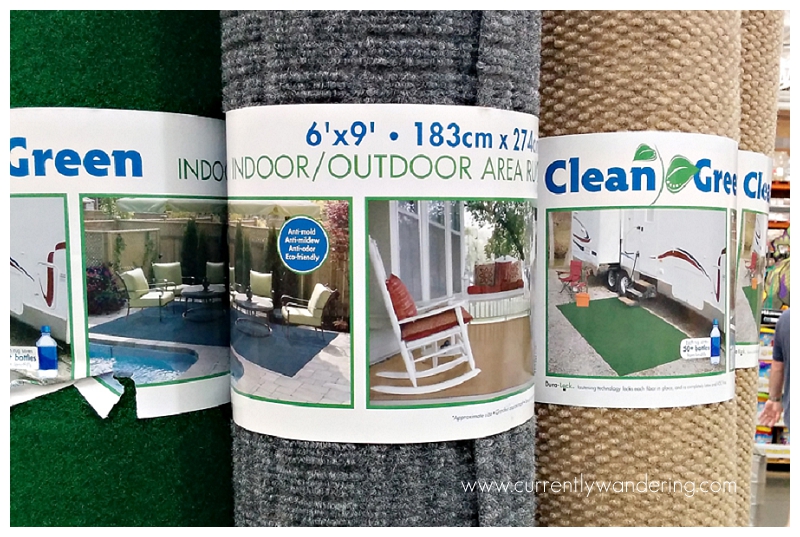
Whilst perusing Costco one day, I saw a possibility:

IMG_20140204_143013

The only problem was the size. It was a 6 foot by 9 foot mat. The bed of the truck (where this would have to live) is a short bed made shorter by the roll-top cover canister. It wasn’t going to fit.

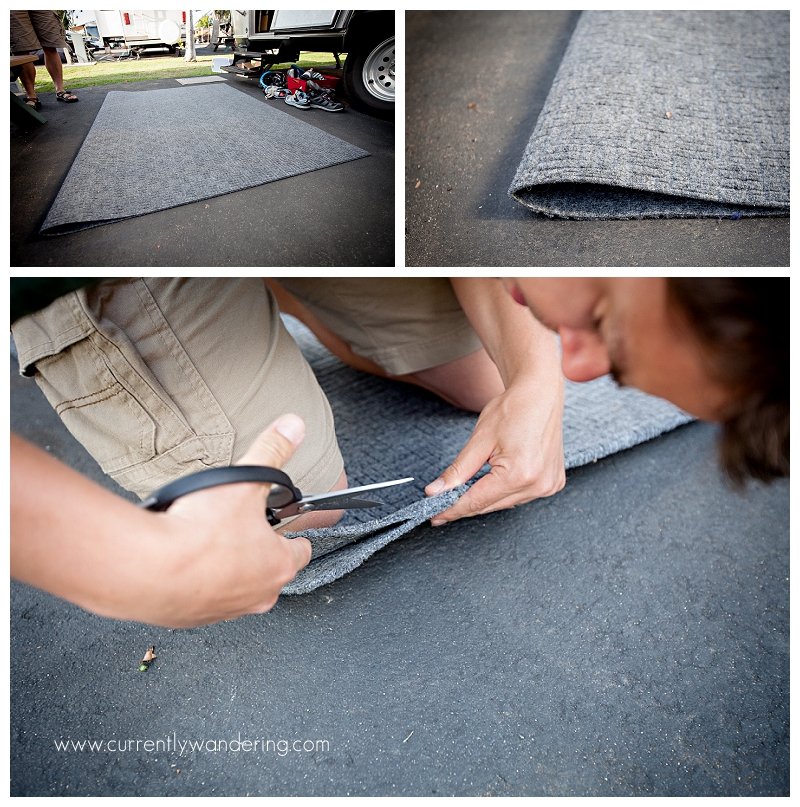
We solved the problem by cutting it in half, resulting in two 6 foot by 4.5 foot sections.

IMG_5542

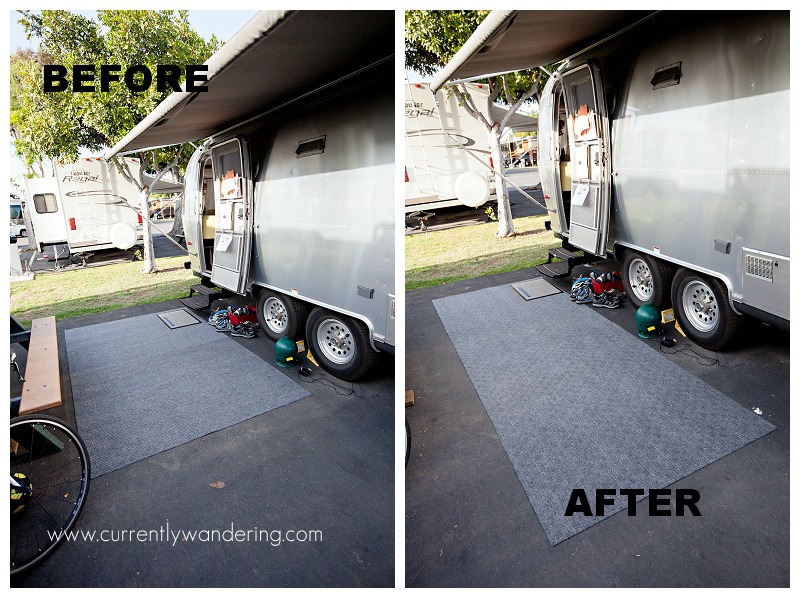
The side effect of such a cut is that we can now deploy only one mat, two in the original size, or rotate them  for a 12 foot by 4.5 foot space, which we like very much.

IMG_5549Rolled up together, it fits in the truck bed nicely.

IMG_5552

It is light weight, sturdy, easy to roll up and store and works great for keeping the dust down. It also gives Jess a nice place to do her workout videos instead of in the dirt of gravel. If you are looking for an outdoor mat, we definitely recommend this one!

Categories
Florida

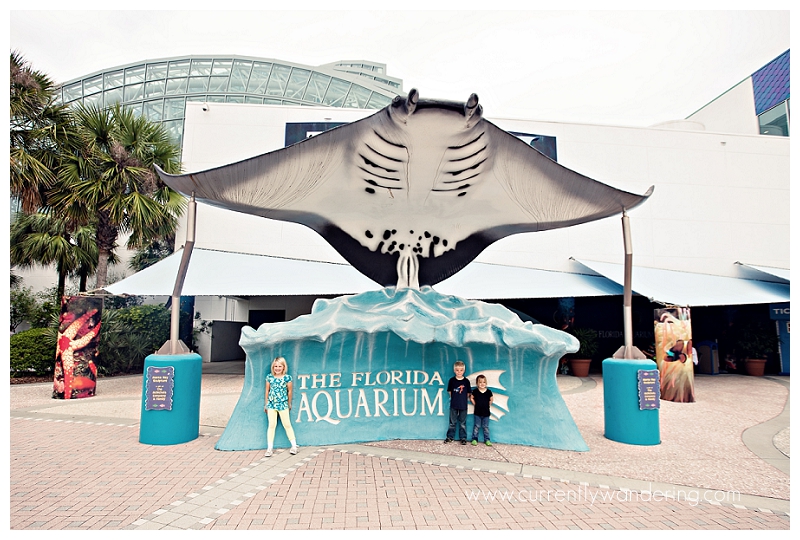
The Florida Aquarium in Downtown Tampa

Tampa Aquarium Florida_001

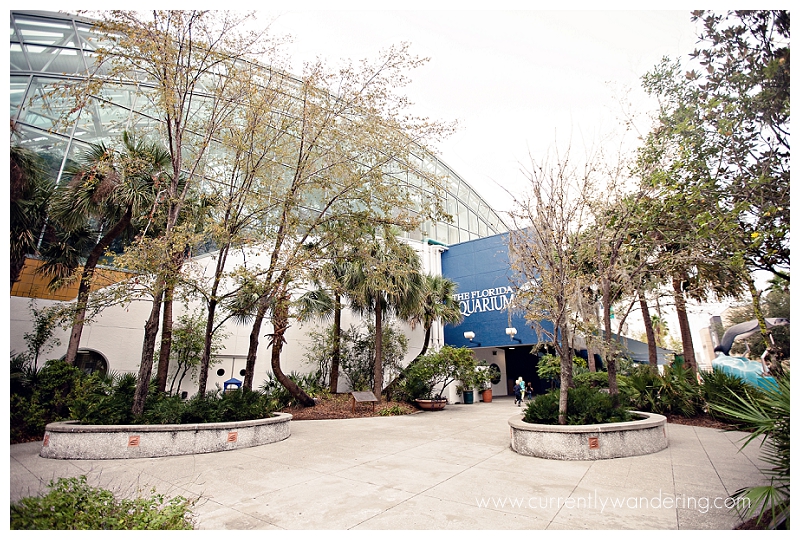
The Florida Aquarium in Downtown Tampa wasn’t on my list to visit until my mother-in-law emailed and told us it was one of their favorites in the entire country. Then it went straight to the top of my list of things I wanted to do in the area. It didn’t disappoint.

When We Visited: December 2, 2013

Ages of Kids: 8, 6, 3

Parking Costs: $6 for all day

Tampa Aquarium Florida_014

Knowing that aquariums are notoriously expensive, the night before I bought a seasons pass to Hogle Zoo in Salt Lake City Utah as they are both members of the Zoos and Aquariums reciprocal program. This allowed us to get in at 50% off instead of paying the full admission price. Even though I only had my emailed receipt as proof of purchase, the staff didn’t hesitate to extend the discount. I was grateful.

This aquarium also taught me an important lesson of traveling the country – never pay for anything extra. A few weeks previous at the Jacksonville Zoo, my kids BEGGED to pay the extra fee to pet the Manta Rays. Here in Tampa, petting the Manta Rays was included. See? Money saved.

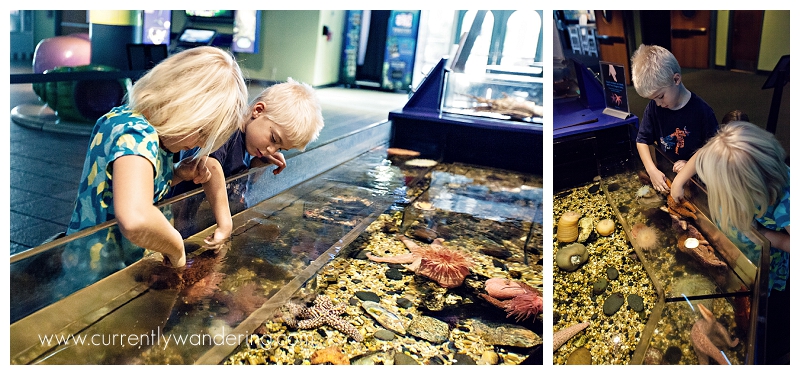
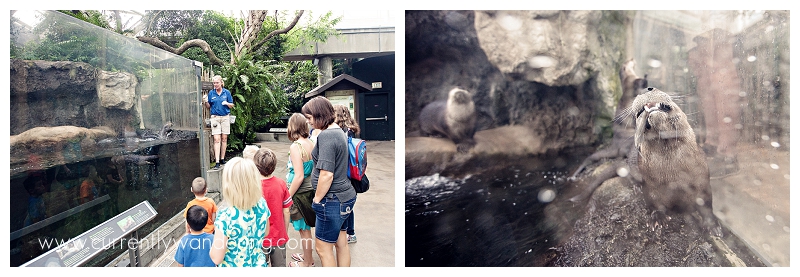
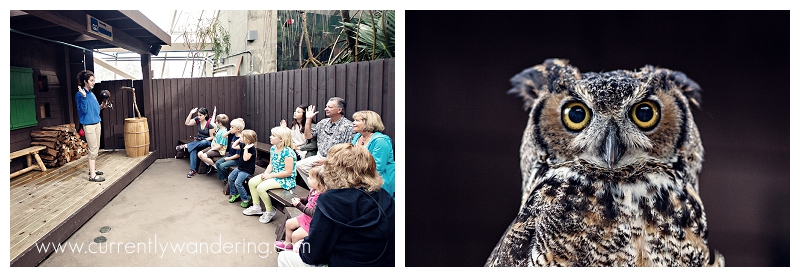
Although not extensively large, the Florida Aquarium did have some good exhibits and trainer talks. We watched a keeper feed the playful sea otters, and another few talk about and show various other animals. We walked through and marveled at the large tanks full of jelly fish, and my kids were brave enough to “pet” the sea cucumber. They also have a HUGE shark tank with divers who talk to you through a speaker system while they are in the water. Tampa Aquarium Florida_003Tampa Aquarium Florida_004Tampa Aquarium Florida_006Tampa Aquarium Florida_008

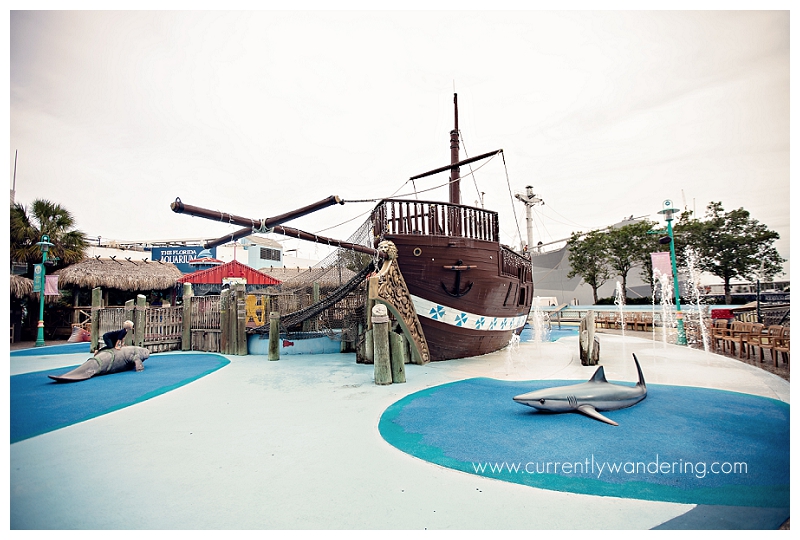
They also have a large outdoor splash pad that I’m sure is extremely popular in the summer, but was very vacant on the 60 degree day we were there. My kids were so disappointed I hadn’t brought their swimming suits, but I let them run around as long as they didn’t get soaking wet.

Tampa Aquarium Florida_013

Definitely a good day and I would recommend visiting if you are in the area.

Categories
Daily Life

State Park vs. RV Campground: Deciding Where To Stay Once We Get There

RV Park vs State Park

Now that you know how we loosely decide where we are going, where do we stay once we get there? There are many options and we try to vary it up from time to time depending on what is close by and how we are feeling. There are advantages and disadvantages to each one which is why its nice to have a few choices. Most of the time we’ll find campgrounds via ReserveAmerica.com, but as I’ve said previously, we also follow other Instagrammers and see where they stay as well.

If you’d like to see the map version of where we’ve stayed, check it out over on Pinterest HERE. I try to keep it up to date, but no promises. I also added our courtesy park locations so that its a complete map of the places we’ve been.

As far as specific campsites go, we actually prefer back in sites over a pull through. Our Airstream has these beautiful panorama windows in the back, and backing into a site generally gives us a fantastic view. In a pull through site we typically get a view of the parking lot or street. Not as exciting.

All the campgrounds differ on the amenities offered. Some have water, electric, and sewer. Other just water and electric. Or just electric with spigots nearby. Most of the National Parks have no hooks up at all and are considered dry camping. The type of amenities offered also plays into where we stay. If we want to be there longer, we try to find a spot with at least water and electric. Without a generator, our battery can only last 1-2 nights depending on how cold it is (our furnace fan runs on electric). Our black tank can last about a week. Our gray tank, if we are careful, 4-5 days. Water I think we can last about 3 but we have never really tried to push that one.

State Parks


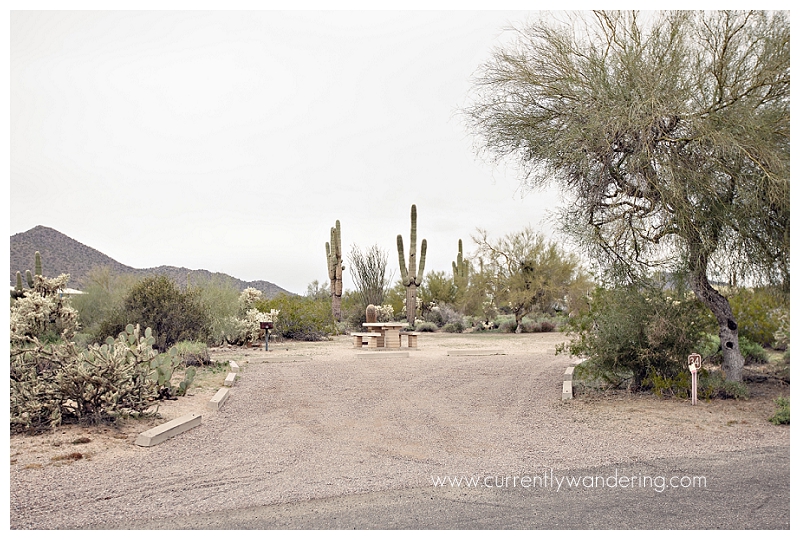
I didn’t think much of state parks when we left Utah. Growing up, we always just camped in the mountains close by and never really visited any of the local state parks (with the exception of Goblin Valley which has always been a favorite). As we started looking at travel plans headed east, we began to notice the variety and abundance of state parks in each region. There’s quite a few, and most states do an excellent job as far as upkeep, check in procedure, nature centers, playgrounds, and other amenities. Some even have their own Jr. Ranger programs and booklets you can do while you are there. State parks tend to be our preferred choice these days. Near the coast/beach they can often be crowded, even parking lot-ish, but most have decent space. Some are close to cities, while others are more remote. A few of our favorites have been Skidaway Island State Park, Huntington Beach State Park, and Huntsville State Park.
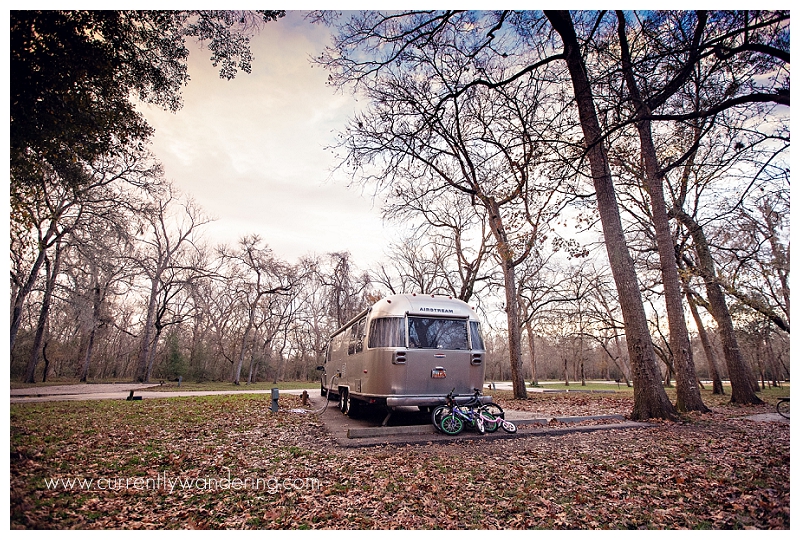
Brazos Bend State Park

Regional/County Parks

In addition to parks and campgrounds run by the state, there are also some run by either the region or the county. I’m pretty sure the designation comes from the funding, but I could totally be wrong on that one. I don’t find much difference between these and state parks. The two that come to mind are Usery Mountain Regional Park in Arizona, and El Chorro Regional Park in California.
IMG_4215-Edit copy

National Parks

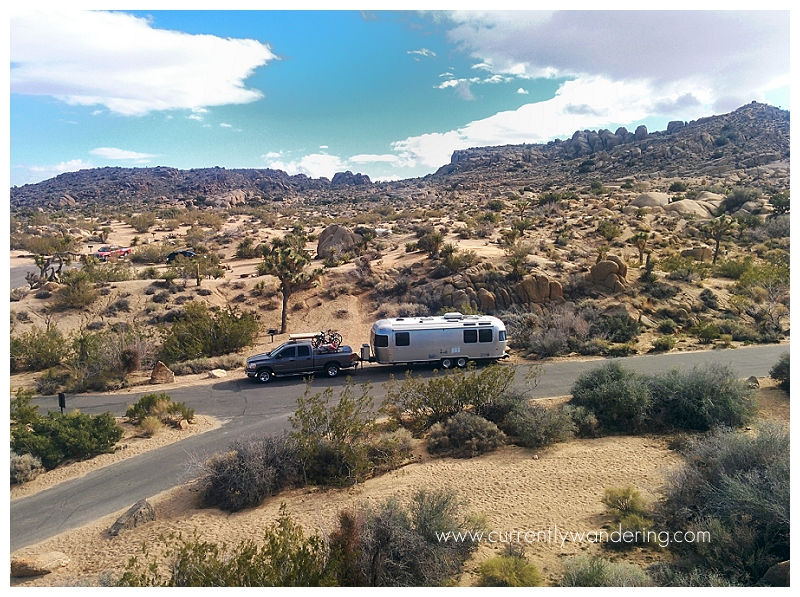
Since we try to visit most of these anyway, its nice to stay inside the park. Many National Parks, however, don’t have much by the way of utility hook ups. Maybe because they are older? Maybe because some have less space? I’m not sure. We stay however long we can and then move on. Joshua Tree was only one night, Pinnacles National Park will be more like 3 as they DO have hookups. There are also quite a few National Parks that don’t have places to stay at all (Carlsbad Caverns, White Sands) so we find either a state park or an RV park close by.
IMG_20140206_140406_1

RV Parks/KOA/Good Sam Park

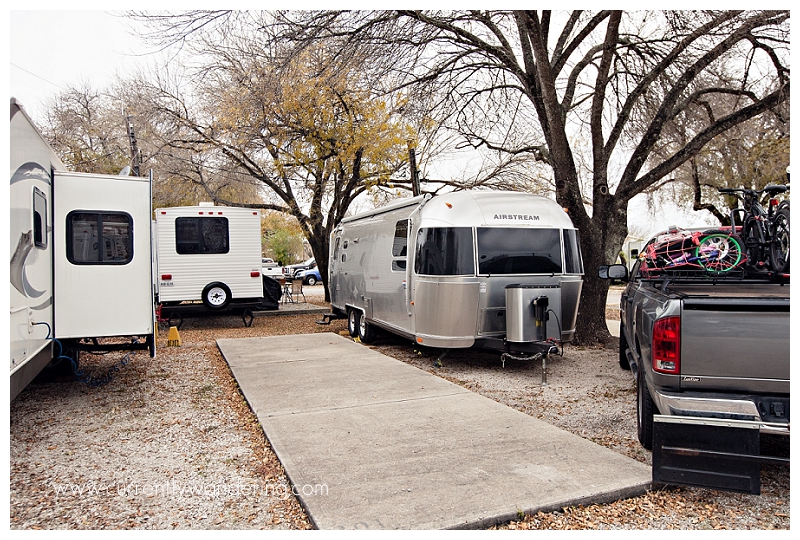
We have both a KOA & a Good Sam Park discount card. You basically pay a yearly subscription and then receive 10% off your stay. We are finding, though, that most of these parks offer a weekly rate that is better than 10% so we try to stay a week to capitalize on that. The biggest perk for staying in an RV Park is that they are usually close to the city, if not IN the city. When there are a lot of touristy type things we want to see (museums, zoos, family) we’ll stay in one of these to save on gas and driving. Yes, we could stay farther out for cheaper and then drive in, but we’ve discovered our time is worth more than that. Most are fairly crowded with tight fitting spaces and not a lot of wiggle room. Some have pools, laundry, and playgrounds, others are more bare essentials. Definitely not our favorite, but usually the kids and I are out on field trips anyway and don’t spend a great deal of time at the Airstream.
RV Park

Dry Camping/Boondocking

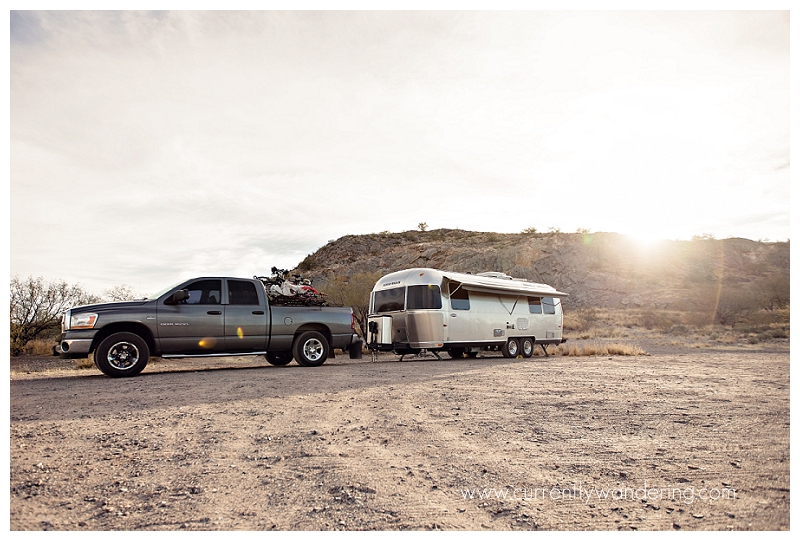
We would LOVE to do more dry camping. This basically means that you are in a space where there are no hookups, but its also typically free from overnight fees. Our first “real” experience boondocking was in Arizona and you can read about that HERE. Water and power conservation come into play, as you have only what your tanks and battery can hold. Knowing that we can go 3-4 days on our water tanks, its really our battery power (charging the laptops so Sam can work is a big one) that holds us back. Once our generator arrives in a few weeks, we plan to do more of this. There are websites that list free camping spots, but we’ve heard the best ones come by word of mouth.
IMG_4015

Wal-Mart/Truck Stops

We have stayed over night at a few of these as well. Often times we’ll scope it out before hand (or call) to make sure they welcome overnight guests (there are many Wal-Mart parking lots in Florida that will kick you out). We try to plan our schedule to avoid these though. Most times we are not driving far enough to need a quick overnight stop, as we need time for school and work. Back to back driving days are not really fun. We did a drive through day at White Sands, NM (coming from Alamogordo) and since there was no place to really stay near there, we spent the night at Wal-Mart in Las Cruces before continuing on to City of Rocks the next morning. Even though we don’t choose this option frequently, its nice to know its there.

Lots of options for parking your trailer for the night. Some good, some bad, some better than others. We generally like to mix in some city with some out of the way trees/forest/beach. Helps keep things interesting and exciting for everyone.
Categories
Daily Life Most Popular Posts

How Do We Decide Where to Go?

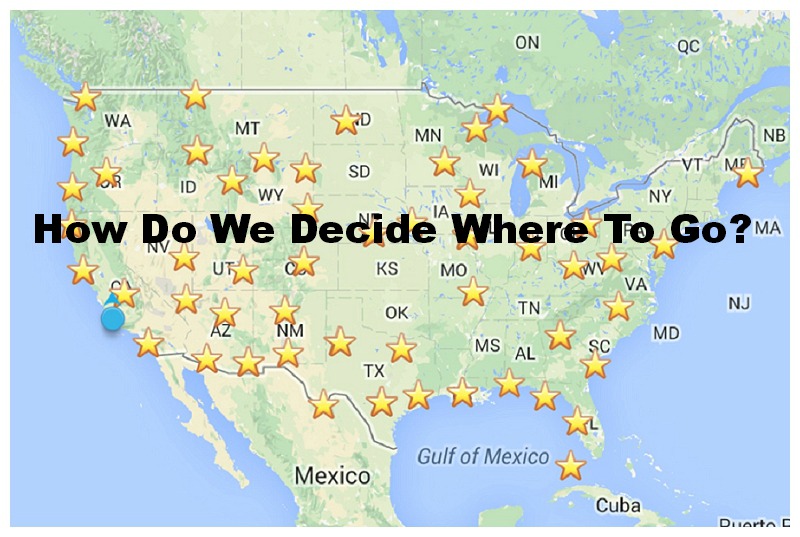
How Do We Decide Where to Go - Choosing destinations while traveling full time

How do we decide where we are going? I’m not going to lie, it is pretty random. We don’t have a method, or a certain system we use to choose where to go. Sometimes we get lucky (Mugu State Park!) other times not so much (Lake Manawa). There are a few things we do though, so I thought I’d list those out in no particular order:

Follow the Weather
South in the winter, north in the summer. Pretty simple. Not having to use our A/C (which only runs if we are plugged into at least 30 amp hook ups), or the heater (uses ridiculous amounts of propane) is ideal. Generally that’s the nicest weather for doing things outside anyway. We started down south over the winter and we are gradually headed north as spring starts poking its head out. That’s also our general plan for the next year: Oregon/Washington in the Fall and then as it gets cold we head down California to hunker down in Arizona and New Mexico for the colder months.

This gives us a general idea of where we want to go, and we plan the specifics only a week or so in advance.

Add Stars to Google Maps
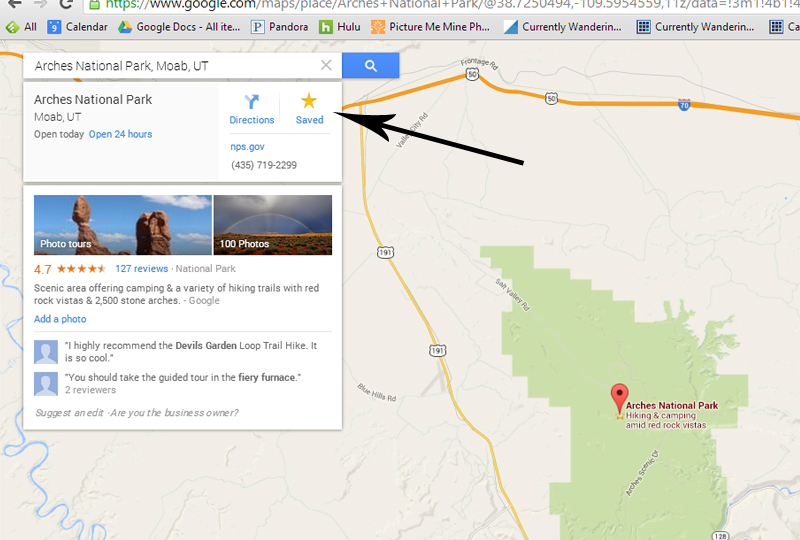
We’d be so lost without Google Maps. Its just so, darn, convenient. If we hear of someplace interesting from a blog or other resource we add a star to our map. Unfortunately the map is tied to a specific Google Account so Sam has his and I have mine. Most often we star the same places though so we could look at either one. Adding a star is super easy, just find the place you are looking for, click on it, and the info box will show up. In the top right hand corner there’s the little “saved” button that turns yellow when you click on it.

Starring in Google Maps copy

Stalk Follow Friends on Instagram
This is probably our biggest resource for cool places to go. We follow at least a dozen other full-timers on Instagram and watch where they go. I’ll use Malimish as an example because they have been traveling for years and they are some of our favorite people.

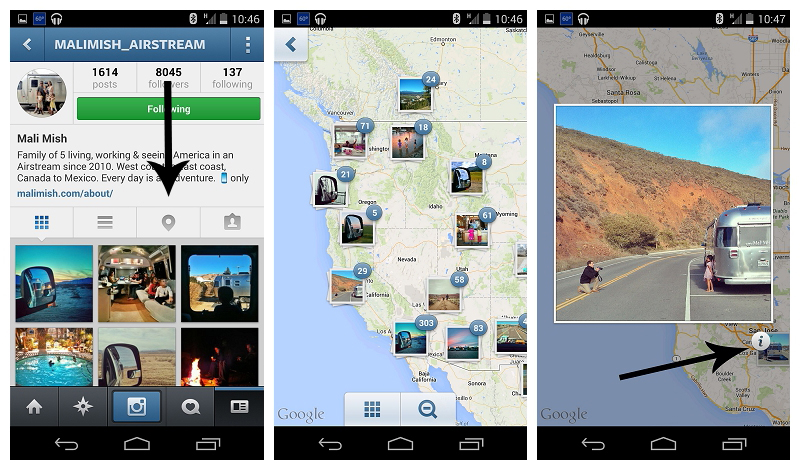
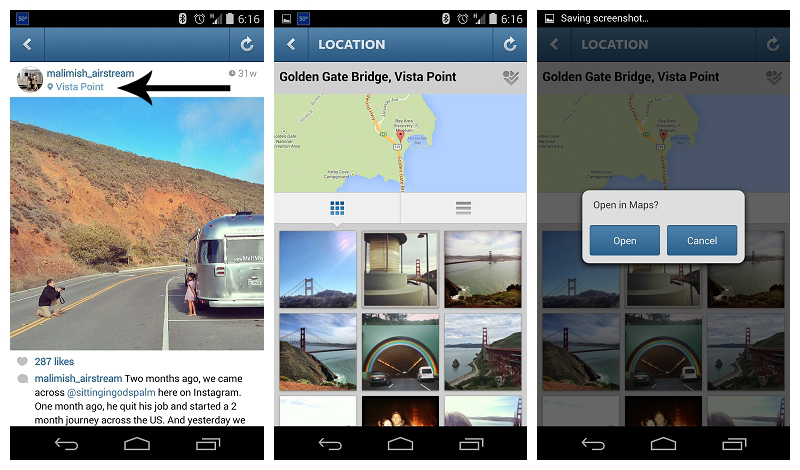
If you click on an Instagram user you get their profile that looks like the first image on the left. If you click the little map pin looking icon, you’ll see a screen that has all their geo tagged photos laid out on a map. As you zoom in, the photos kind of spread out an the map becomes more accurate. If you click on an individual photo, you’ll see the little “i” button beneath it.

Using Instagram to Decide Where to Go

Clicking the little “i” info button will bring up that photo in the user’s Instagram feed and you can see where they geo tagged it. In this example, Malimish was at “Vista Point” in San Francisco. Clicking on the location will bring up a small map and any other images on Instagram that have been tagged with that location. Kind of nice if you want to see another point of view for someplace you want to visit. If you click on the map, you’ll get a prompt screen to “open in maps?”

Screenshot_2014-03-10-06-16-48

This is where my lovely system breaks down a bit. On a good day, my phone would open Google Maps and zoom right to Vista Point where I could then click on it and add a star. Sometimes Google Maps just opens and sits there staring at me. In that case, I’ll just type the location into the Search bar and look for it that way. Other times it’ll zoom to the location and put a pin in an awkward spot that I can’t save. If I hunt around a bit and find the location and then click on THAT I can usually get to the star. This also breaks down for boondocking (or dry camping) spots. Google won’t let you just save a star in the middle of nowhere anymore. More often than not, it has to be on a road or other significant spot. I’ll try and save a location close by, or if all else fails, I’ll write it down in a Google spreadsheet.

Visit Friends
This is a big one too. We have a lot of casual friends from our days as students at BYU. Our ward was pretty close, and we’ve kept in loose contact with a lot of our friends. After leaving BYU in Provo, they’ve scattered all over the country. We try to be aware if there’s anyone we know in the area and offer to stop by and visit, or most times we courtesy park so we can stay up all night talking while the kids are asleep. 🙂

Don’t Plan Too Far in Advance
Our plans change frequently enough that we try not to plan too far in advance. Especially if we are going to see someone. I hate to tell them “Hey! We’re coming!” and then something changes and we don’t. On the other hand, its nice to give notice that we are coming in case they have something going on. Its a balancing act. The only problem with not planning in advance is sometimes campgrounds are full and we can’t get in to places we want to go. We’ve been warned that some of the more popular National Parks (Yosemite, Black Hills, Zion) fill up and you have to plan a couple months in advance. Accordingly, we already have reservations in Snow Canyon State Park and Zion National Park in Utah for the end of May. I just hope it works out that we can actually be there for our reservations. Not having a super tight, reserved out schedule also gives us the flexibility to stop if we find something unexpectedly awesome, or if we just decide to stay longer at a particular location.

There you go! Stars on a map, generally follow the weather, take a look at the stars in an area and decide where exactly we want to go and plan a route about a week in advance. Planning the route involves a lot of Google Map directions, looking at reserveamerica.com to see where the campgrounds are (lots of “find a campground near Mountain View, CA” type searches), and then picking one we like.We like to only travel 2-3 hours when we move so we’ll hunt for stops in between if there’s nothing obvious between us and a particular location. Often the out of the way, hidden locations turn out to be some of our favorite places.


Categories
Airstream Accessories Inside the Airstream

In Which I Replace the Range Hood Fan

Flash back with me to Christmas. We were staying at Huntsville State Park. Jess was cooking. She had the vent hood fan on, which draws air in over the range and pushes it out the kitchen vent in the side of the Airstream. The fan is a bit loud when it is on, but works well. Until, all of a sudden…

wakka-wakka-wakka

The fan got noisy in a hurry. Jess dove for the switch.

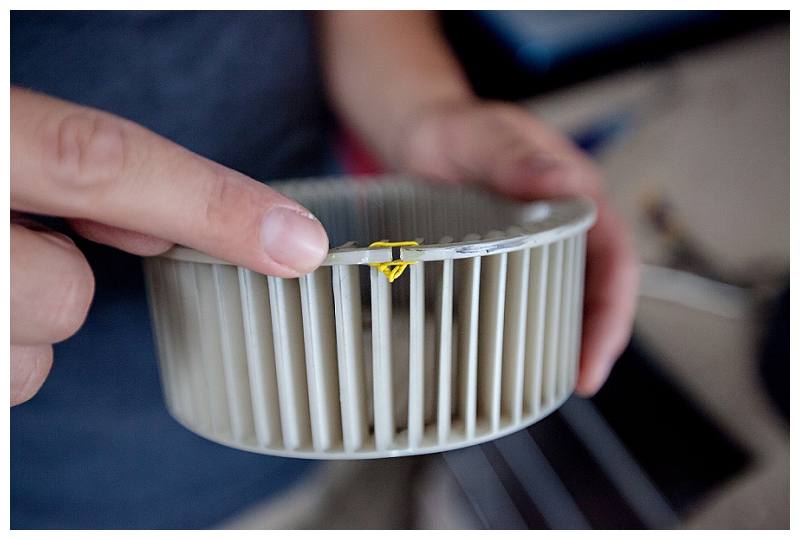
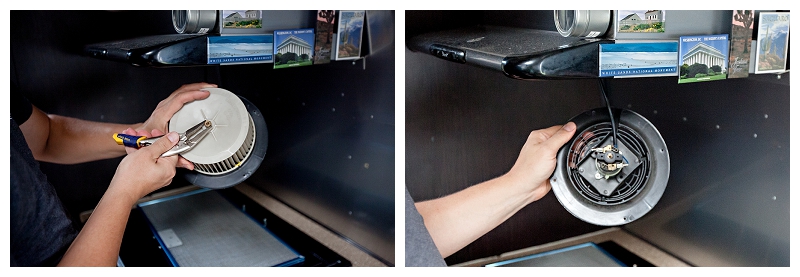
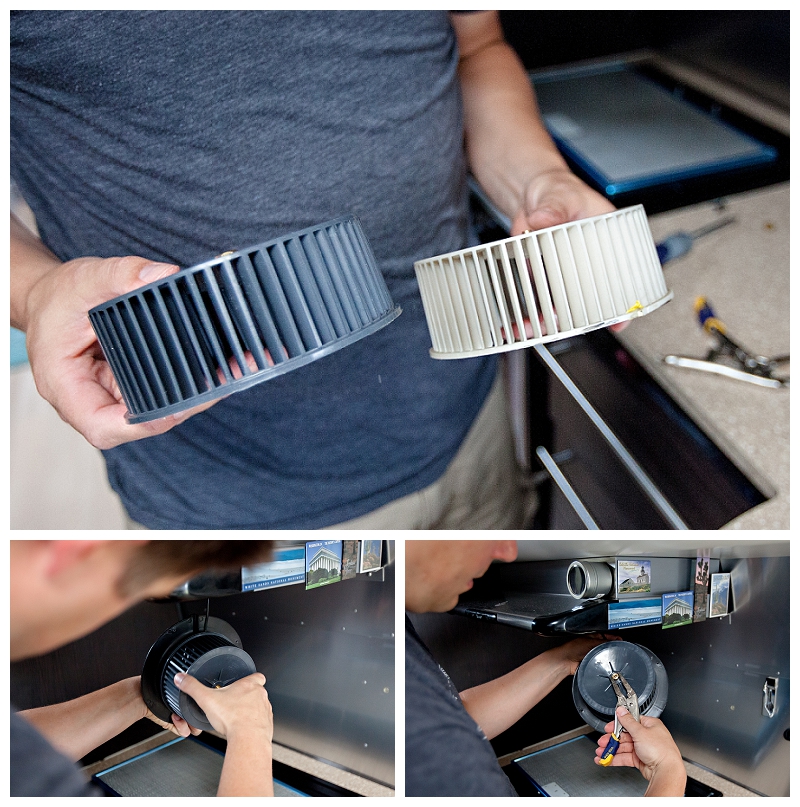
After things calmed down and cooking and dishes were done, I dissected the range hood. The cylinder shaped plastic fan had broken, and the exposed edge of the break was hitting the fan housing.

Locating a replacement part was difficult. Many of the parts Airstream uses are common brands, and easy to find. The vent hood is made by Baraldi, which appears to be a company that mostly makes commercial kitchen range hoods. Unable to find a part online, I called Airstream directly.

Airstream was extremely helpful. I spoke with Carly, and within a few minutes (with the last 6 of the Airstream’s VIN) she was able to pull the schematics of the kitchen, and narrow down the part I needed. She then emailed me the part number, a picture of the part, and a list of Airstream dealers that could order it for me. (Airstream part 512210-101, though your specific model might have a different fan.)

In between finding the problem and calling Airstream, I tried a few temporary fixes: glue and wire. The glue didn’t work. The wire didn’t either. We just didn’t use the range vent fan for a few months, which led to extremely an extremely steamy (!) or smokey Airstream during mealtimes. We used the built in fantastic fans, but the effect isn’t as nice.

IMG_5563

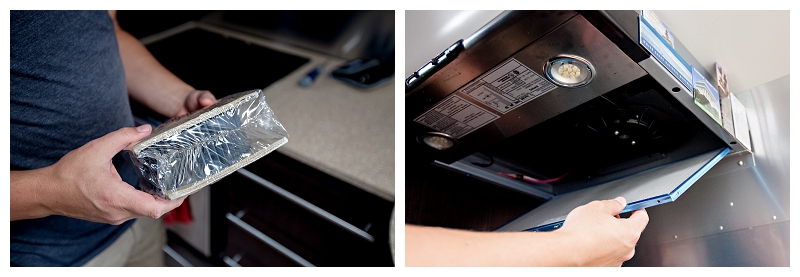
I finally called an Airstream Dealer when we arrived in California, and had the part ordered. It is apparently a rarely needed part, so nobody had it in stock. The part arrived, and was replaced in just minutes.

IMG_5554

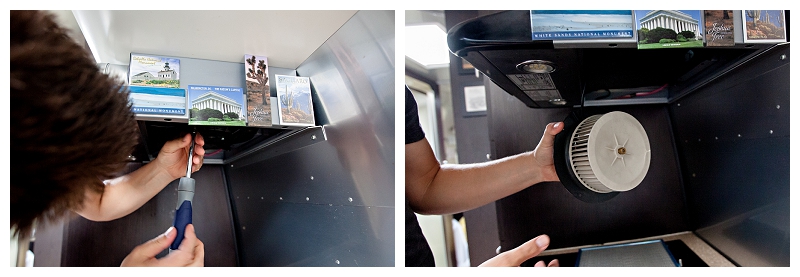
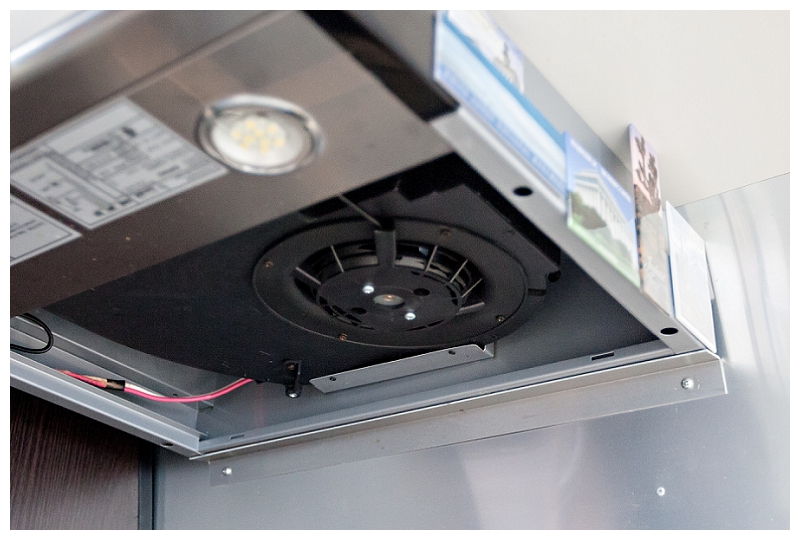
A phillips screwdriver is needed to remove the fan assembly, and a pair of plyers (or small vice grips…) is needed to remove and replace the nut holding the fan to the motor. Just don’t lose anything, and put it all back the way you found it, and the replacement will go very easy.

IMG_5558IMG_5560IMG_5562This part replacement was simple, and doing it myself saved some money and a trip for the Airstream into a dealership. It is now back to it’s normally loud operating mode!
IMG_5566